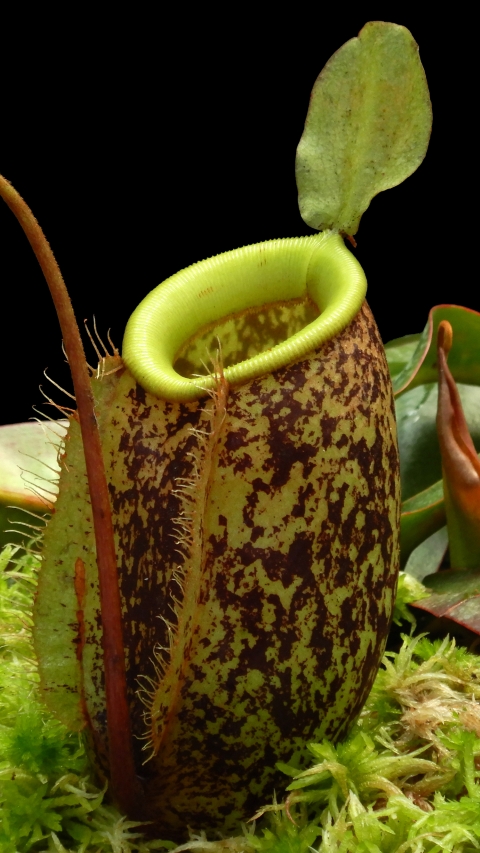
Thomas Gronemeyer · CC BY-SA 4.0
About
A distinctive and widespread tropical species, *Nepenthes ampullaria* is notable because it has evolved away from traditional carnivory, deriving a substantial portion of its nutrients by collecting and digesting falling leaf litter (detritivory). It is often found forming a carpet-like appearance of pitchers over the soil.
Named Cultivars & Grex
N. Ampullaria 'Black Miracle' (BM)
A striking grex selected for its uniformly dark red to near-black pitchers. The deep pigmentation develops fully under bright light. Pitchers are small and squat in the typical ampullaria form, forming a carpet of dark rosettes. Highly sought after for the dramatic contrast it provides in collections.
N. Ampullaria 'Green Apple'
A clean, all-green grex with bright apple-green pitchers and a pale peristome. Lacks the red speckling common in wild-type forms. A popular choice for collectors who appreciate the vivid, uniform colouration. Grows vigorously under typical lowland conditions.
Field notes
Morphology
The plant can climb up to 15 meters in height. Leaves are light green, up to 25 cm long and 6 cm wide. Pitchers are generally small, rarely exceeding 10 cm in height and 7 cm in width. The pitchers are urceolate and range in color from light green to completely dark red, with green or green-red speckled forms common in Sumatra and Peninsular Malaysia. The peristome is greatly incurved, and the inflorescence is a dense panicle.
Distribution & habitat
Native to Borneo, the Maluku Islands, New Guinea, Peninsular Malaysia, Singapore, Sumatra, and Thailand. It is found in diverse habitats including kerangas forest, peat swamp forest, heath forest, and paddy fields, generally from sea level up to 2,100 meters.
Ecology
The species is partially detritivorous, acquiring nutrients by digesting leaf matter that falls to the forest floor. It is one of the few species in the genus to lack lunate cells in its pitchers, and its atypical, small, reflexed pitcher lid allows leaf litter to fall directly into the pitcher. It is thought that infaunal organisms, such as mosquito larvae, facilitate the breakdown of leaf litter, aiding in the transfer of nitrogen to the plant.
History & etymology
The species was described in 1996 and given the vernacular name flask-shaped pitcher-plant, a name that was later dropped in the 2008 second edition.
Habitat
- Altitude
- 0–2,100 m
- Altitude Class
- intermediate
- Native To
- Malaysia, Indonesia, Brunei, Papua New Guinea, Thailand, Singapore
- IUCN Status
- Least Concern
Taxonomy
- Described
- 1835
- Authority
- Jack
Cultivation
- Difficulty
- easy
- Temperature
- Day 28–35°C / Night 20–28°C
- Humidity
- 70–95%
Borneo Exotics 17 listings
View all →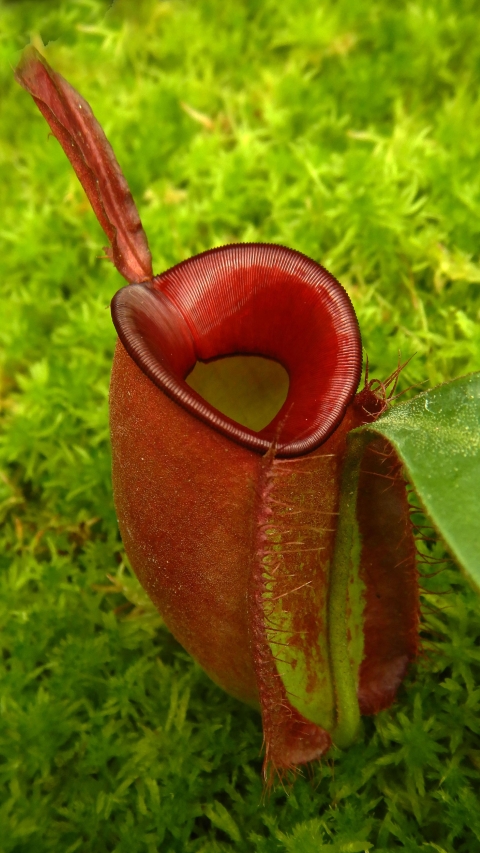
BE-3681
N. ampullaria - Brunei red - selected clone
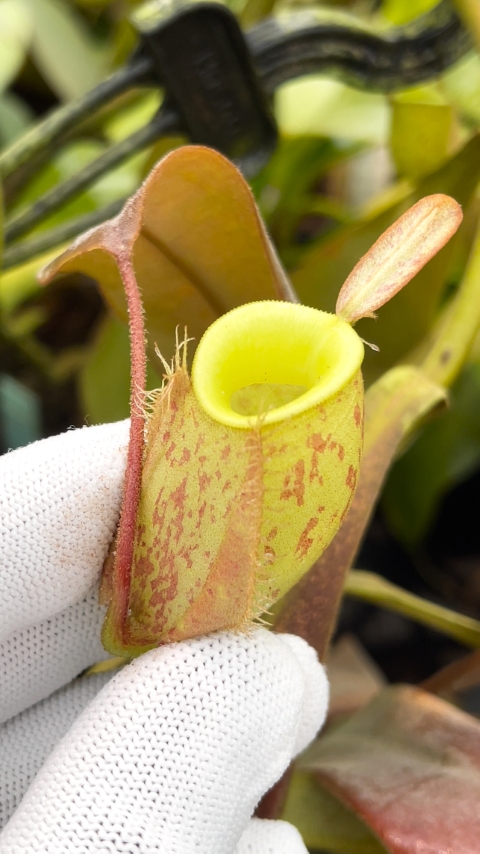
BE-3450
N. ampullaria - Papua intermediate
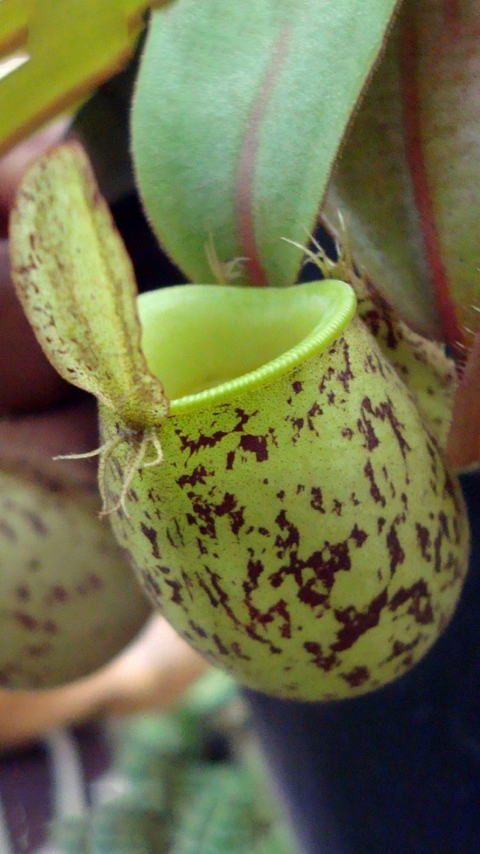
BE-3007
N. ampullaria - speckled
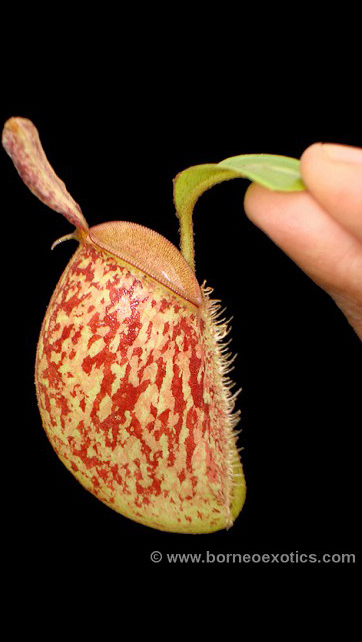
BE-3304
N. ampullaria -'Bronze Nabire’ - selected clone
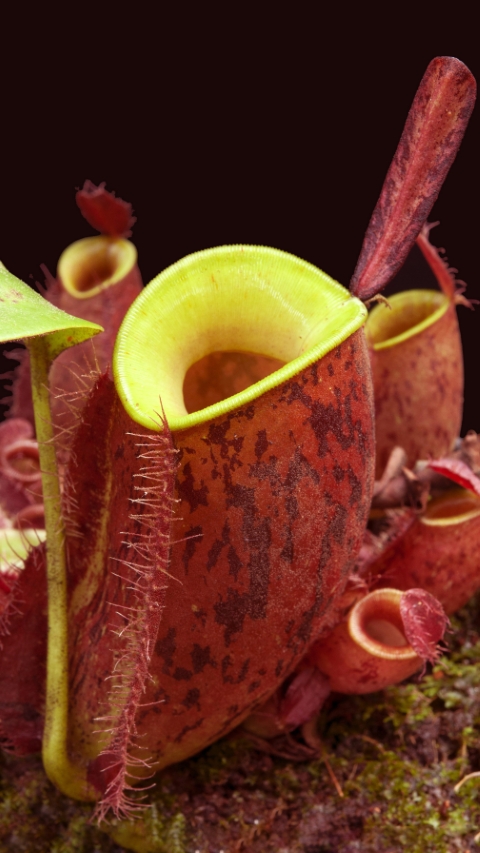
BE-3390
N. ampullaria 'Lime Twist'
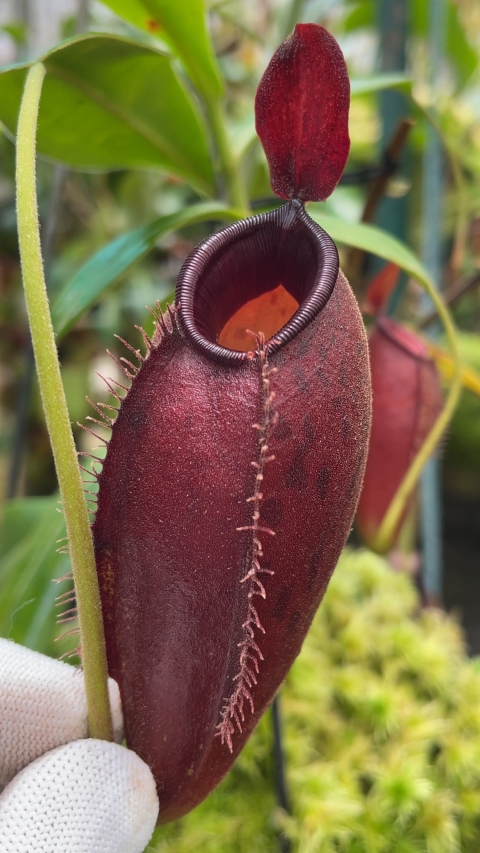
BE-3758
N. ampullaria x aristolochioides – selected red clones
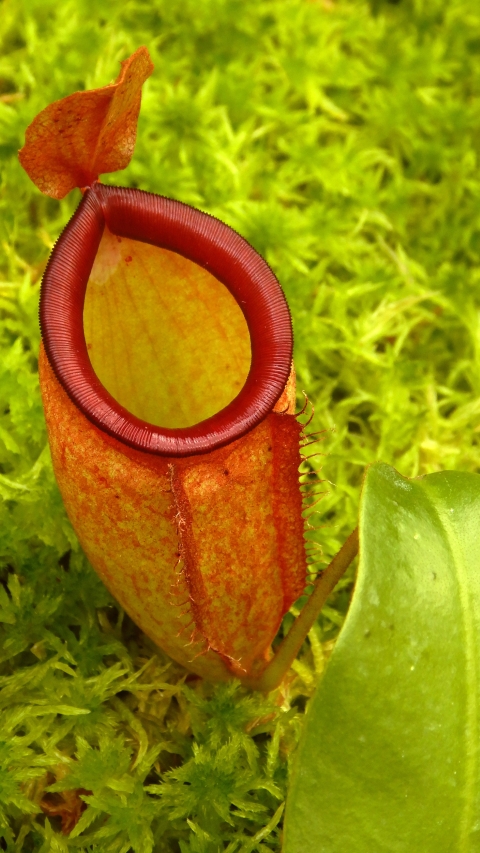
BE-3840
N. ampullaria x campanulata - best selected clone
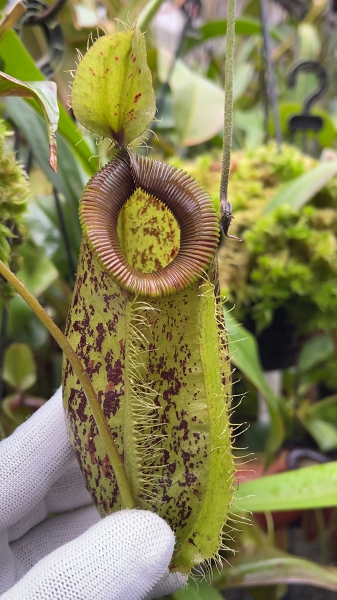
BE-4631
N. ampullaria x hamata – selected speckled clone
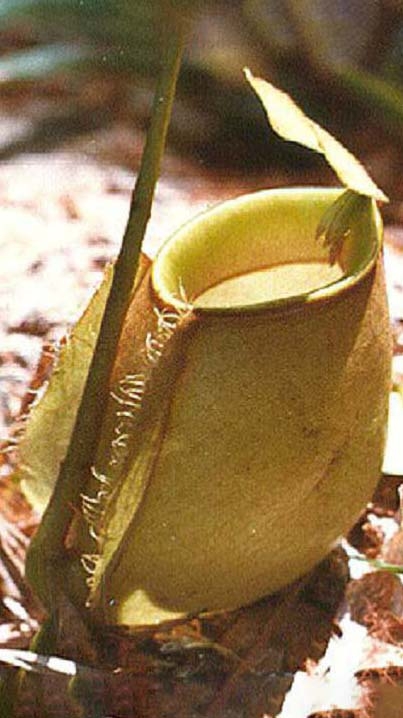
BE-3033
N. bicalcarata x ampullaria – selected clone
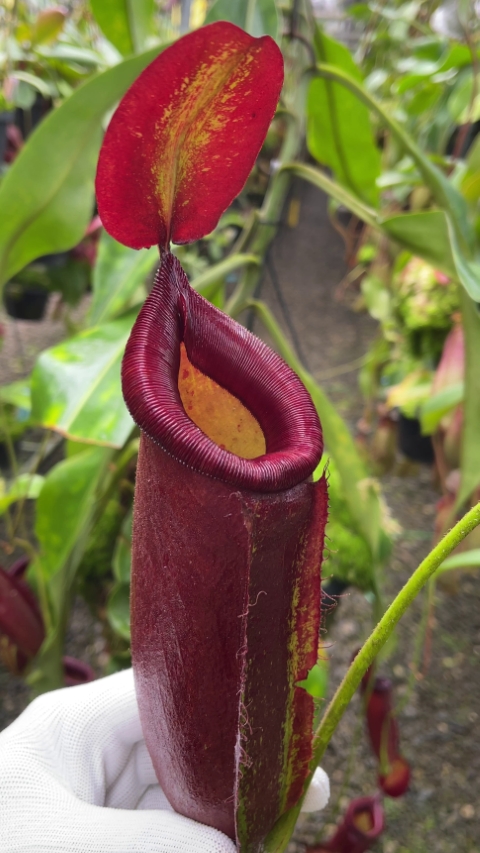
BE-3767
N. robcantleyi x ampullaria - selected clone
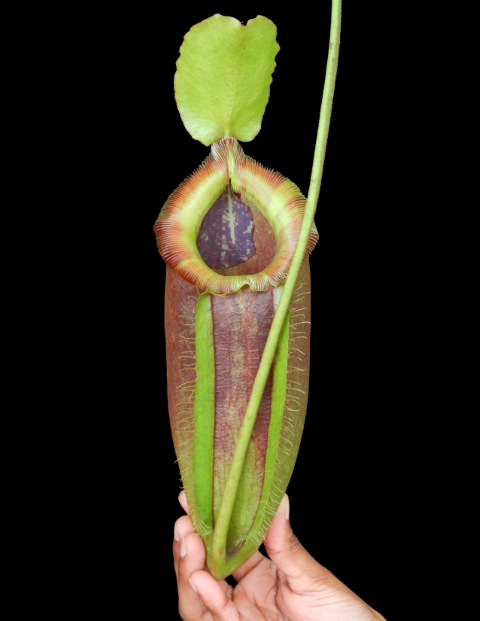
BE-3744
N. singalana x ampullaria – best selected clone
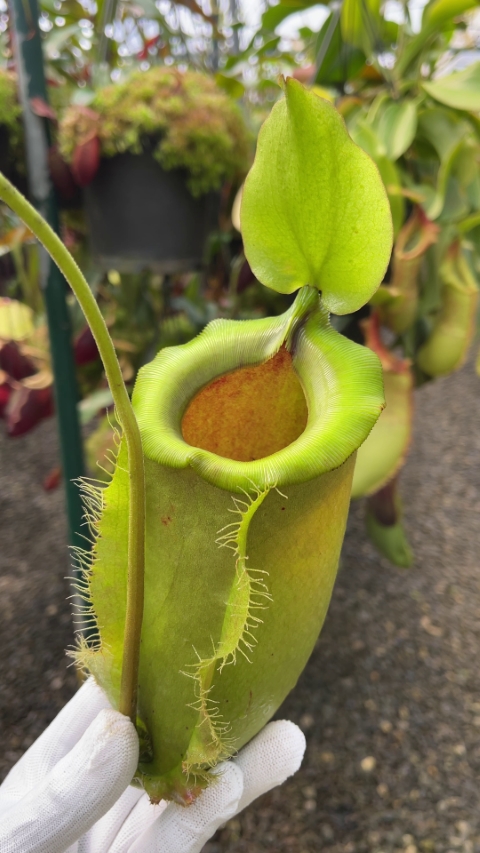
BE-4050
N. spathulata x ampullaria – solid green
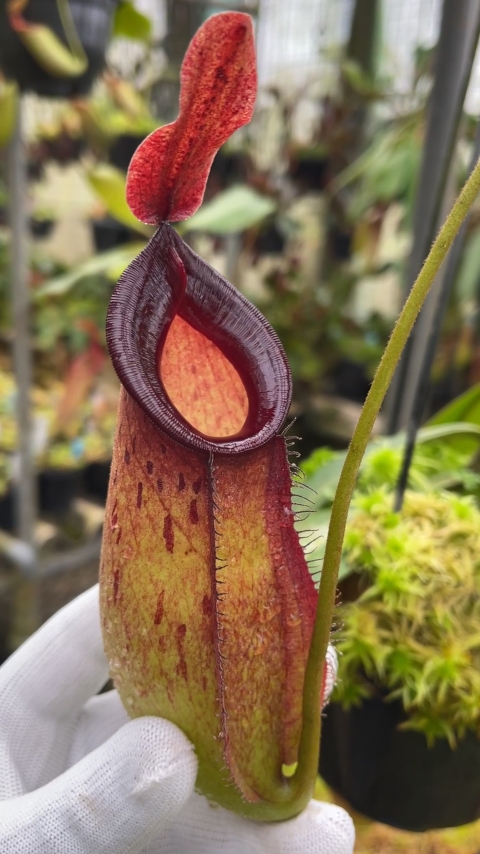
BE-4570
N. ampullaria x zakriana - selected clone # 3
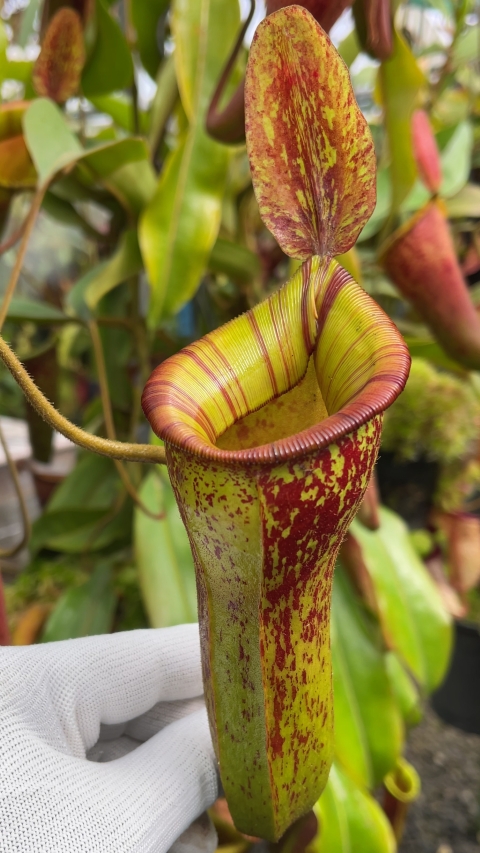
BE-4027
N. ampullaria x (veitchii x lowii) – selected clone
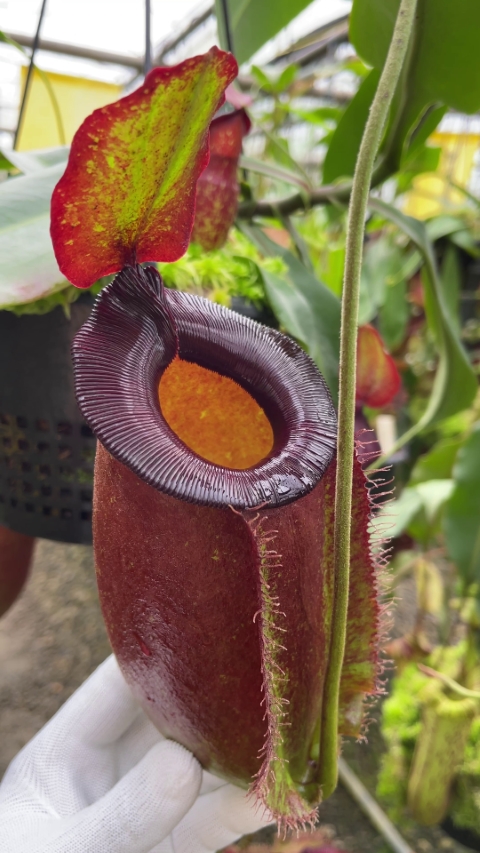
BE-4073
N. spathulata x ampullaria – solid red
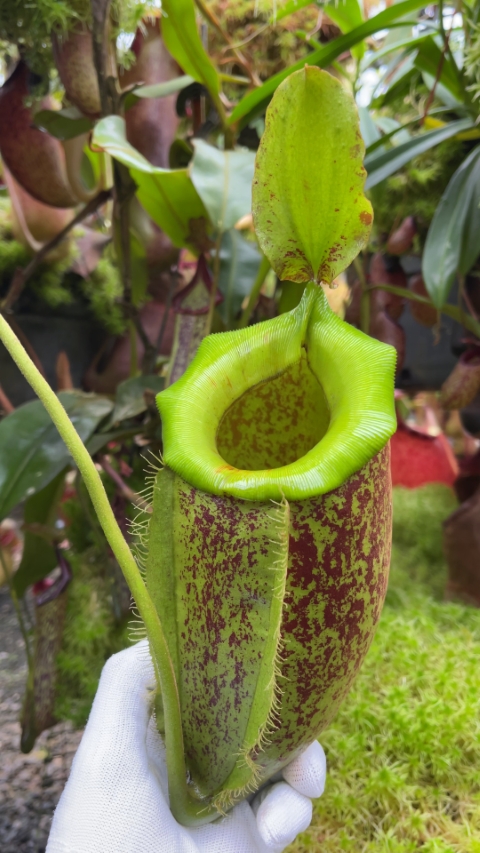
BE-3881
N. spathulata x ampullaria – burgundy speckled
BE-4584
N. sibuyanensis x ampullaria – selected speckled clone
Crossed N. Ampullaria with another species?
Register the cross — if it's not yet documented you'll be the first contributor. If someone already registered it, you'll be redirected to add your photo.