Wikimedia Commons contributor · CC BY-SA
About
Nepenthes *aristolochioides* is a climbing tropical pitcher plant endemic to Sumatra. It is characterized by its unusual pitcher morphology, which features a pitcher opening that can be nearly vertical. The species is currently listed as critically endangered due to overcollection.
Field notes
Morphology
The plant is a climbing species with terete, branched stems that can grow up to 8 meters in length. Leaves are coriaceous, linear to spathulate-lanceolate, and up to 20 cm long. Pitchers are notable for having a horizontal, oblique, or almost vertical pitcher mouth. Lower pitchers are broadly infundibular, reaching 7 cm in height, while the larger aerial upper pitchers can reach 15 cm in height and 8 cm in width. The peristome is broad, greatly incurved, and features prominent ribs and teeth.
Distribution & habitat
This species is endemic to Sumatra, Indonesia. It thrives in tropical conditions at elevations ranging from 1800 to 2500 meters above sea level. Its habitat is characterized by the moist, tropical forest environment typical of the region.
Ecology
As a carnivorous plant, *Nepenthes aristolochioides* captures prey using its specialized pitchers. The pitchers are lined with glandular regions and possess a flattened, incurved peristome that aids in trapping insects. The specific mechanism of prey capture involves the combination of the sticky glands and the structure of the peristome, which guides trapped organisms into the digestive fluid.
Cultivation notes
This species requires tropical conditions, ideally with high humidity and consistent warmth. It is a climbing plant, requiring support to grow to its full potential. While specific growth rates are not detailed, it is generally considered a challenging species to cultivate due to its specialized habitat requirements.
History & etymology
The species was first collected by Willem Meijer on August 5, 1956, from Mount Tujuh in Jambi, Sumatra. The name *aristolochioides* was coined because the pitchers resemble the specialized flowers of the genus *Aristolochia*. It was finally formally described by Matthew Jebb and Martin Cheek in 1997.
Conservation
The species is critically endangered due to overcollection. Its restricted endemic range in Sumatra makes it highly vulnerable to habitat loss and unsustainable harvesting.
Habitat
- Altitude
- 1,800–2,500 m
- Altitude Class
- highland
- Native To
- Indonesia
- IUCN Status
- Critically Endangered
Taxonomy
- Described
- 1997
- Authority
- Jebb & Cheek
Cultivation
- Difficulty
- difficult
- Temperature
- Day 18–25°C / Night 10–18°C
- Humidity
- 80–95%
Borneo Exotics 12 listings
View all →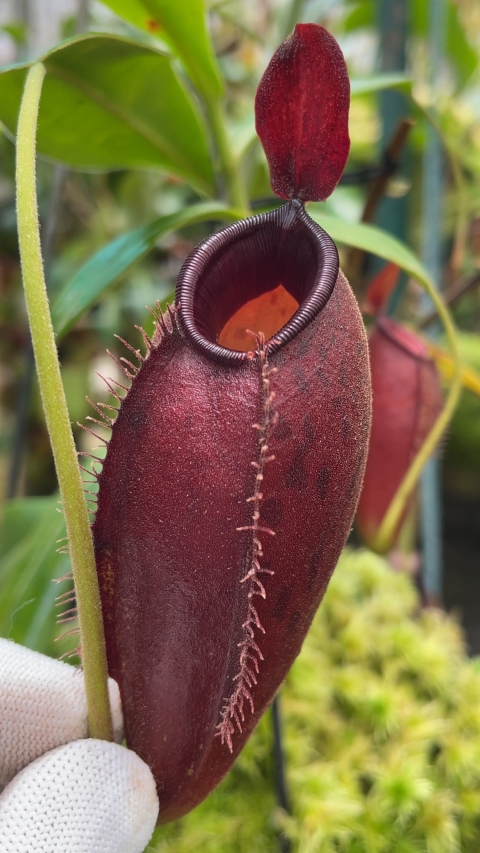
BE-3758
N. ampullaria x aristolochioides – selected red clones
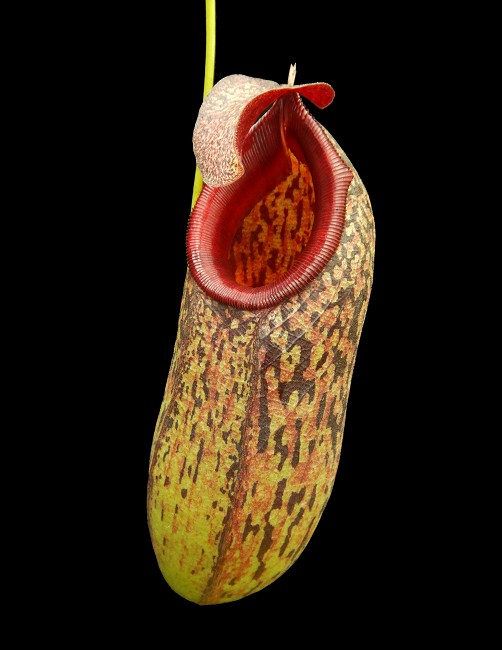
BE-3832
N. aristolochioides x burkei – selected clone
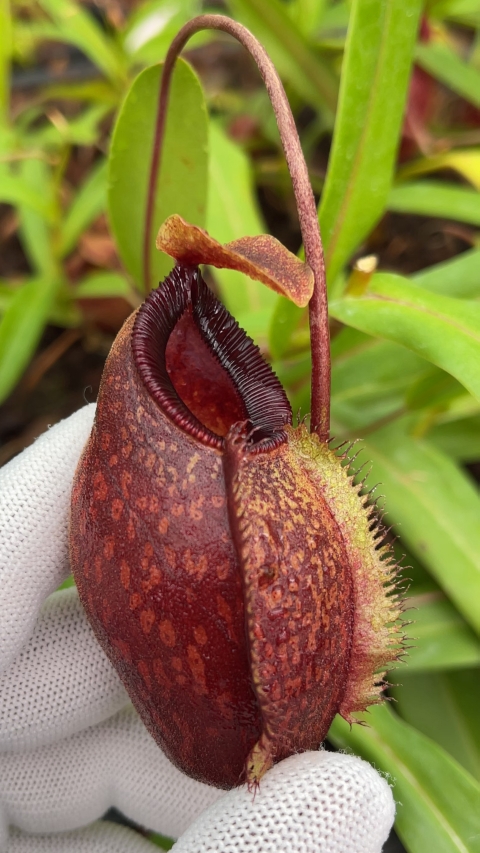
BE-3898
N. aristolochioides x diabolica - assorted clones from cuttings
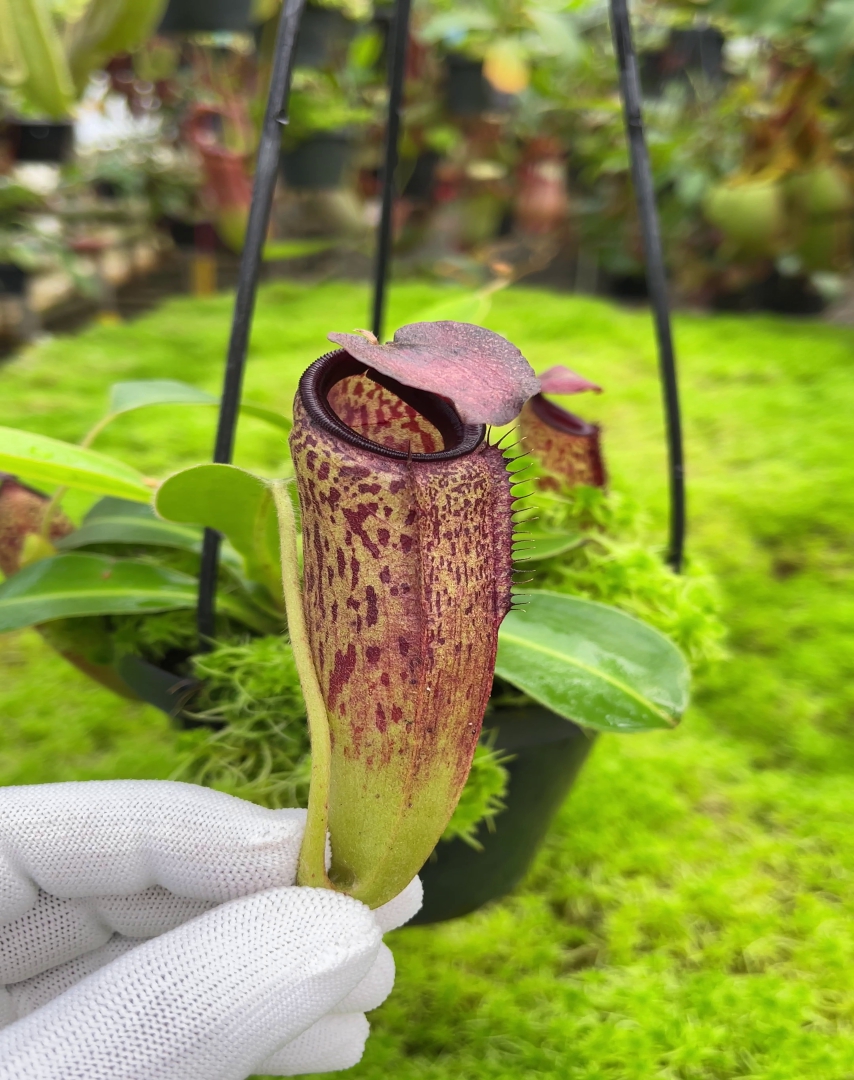
BE-4565
N. aristolochioides x veitchii - assorted clones
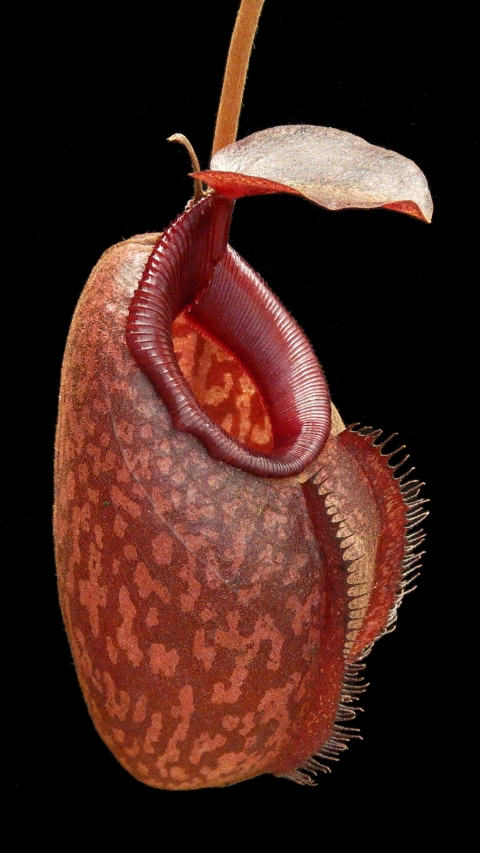
BE-4076
N. densiflora x aristolochioides – assorted clones
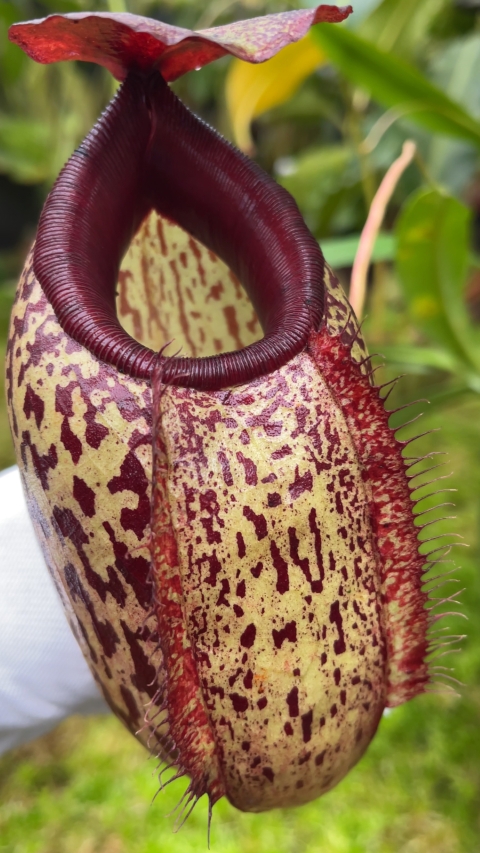
BE-3877
N. merrilliana x aristolochioides – best selected clones
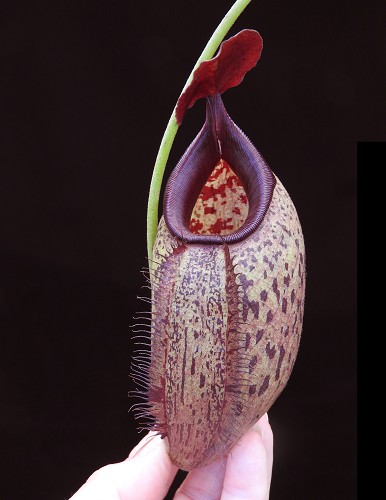
BE-4036
N. robcantleyi x aristolochioides – assorted clones
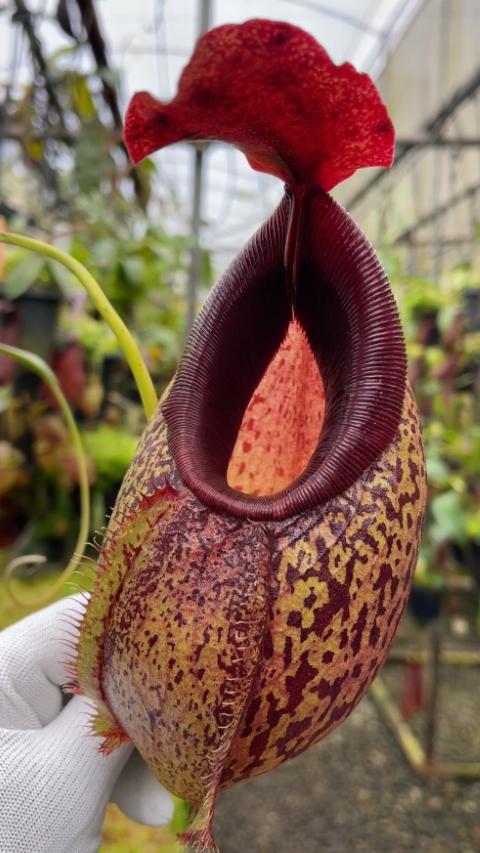
BE-4077
N. spathulata x aristolochioides
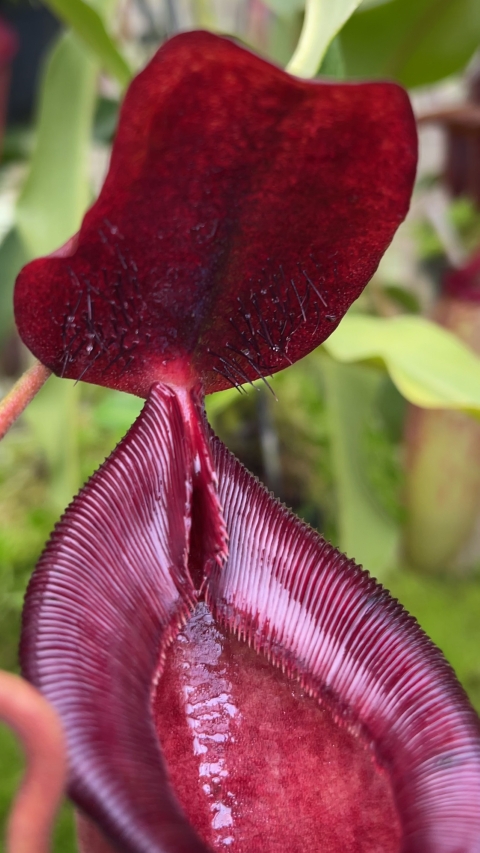
BE-4555
N. (aristolochioides x spectabilis) x lowii – assorted clones
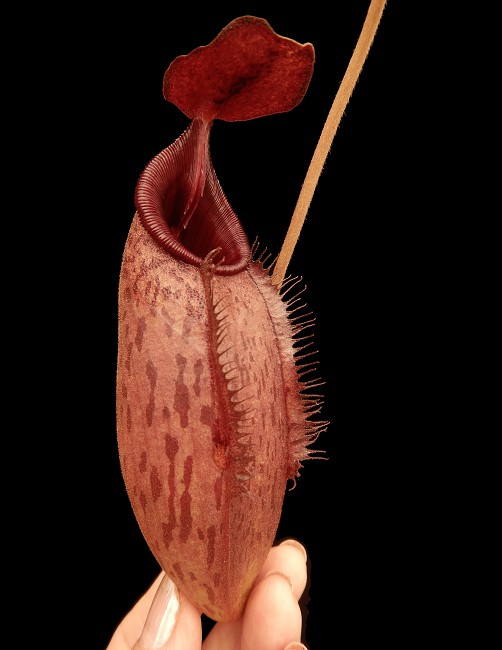
BE-4550
N. (veitchii x lowii) x aristolochioides - assorted clones
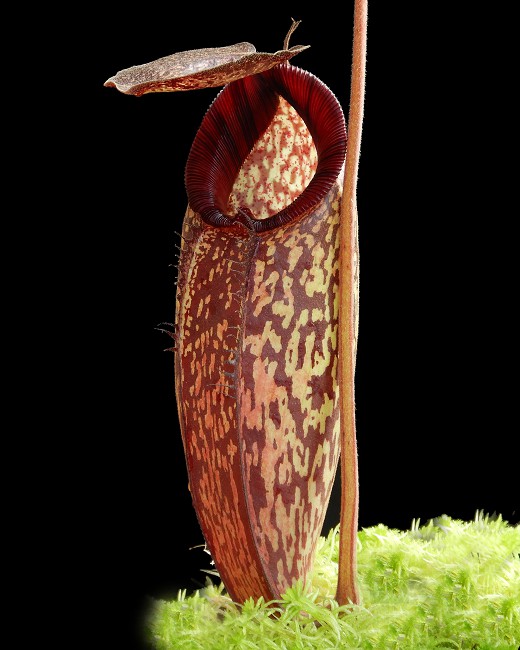
BE-4583
N. (aristolochioides x spectabilis) x klossii – assorted clones
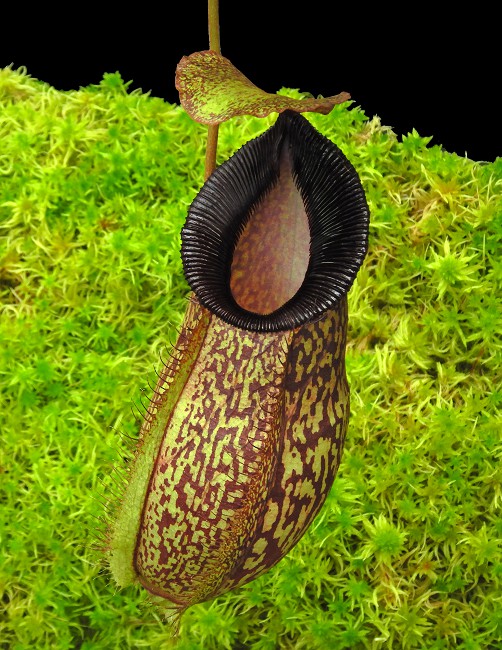
BE-4574
N. (aristolochioides x spectabilis) x hamata ‘Lumut’
Crossed N. Aristolochioides with another species?
Register the cross — if it's not yet documented you'll be the first contributor. If someone already registered it, you'll be redirected to add your photo.