Lower pitchers of N. burbidgeae growing in mossy forest
No machine-readable author provided. NepGrower~commonswiki assumed (based on copyright claims). · CC BY-SA 2.5
About
Nepenthes burbidgeae, also known as the painted pitcher plant, is a tropical pitcher plant endemic to Mount Kinabalu in Borneo. It is a strong climber that thrives in montane forest environments.
Field notes
Morphology
The plant is a strong climber with stems reaching up to 15 meters and up to 18 mm in diameter. Leaves are coriaceous and petiolate, with the lamina being oblong, up to 40 cm long by 10 cm wide. Lower pitchers are relatively large, reaching up to 25 cm high by 10 cm wide, and feature a flattened, expanded peristome up to 30 mm in width. The operculum is ovate and up to 8 cm wide, bearing a distinct keel and a characteristic hooked appendage.
Distribution & habitat
This species is endemic to Kinabalu National Park, with a patchy distribution around Mount Kinabalu and neighboring Mount Tambuyukon in Sabah, Borneo. It is found in habitats ranging from 1100 m to 2300 m above sea level, specifically recorded from the Marai Parai plateau and Pig Hill. Its typical habitat is mossy or montane forest, often growing in low scrub and exposed areas on steep ridges.
Ecology
The pitchers are carnivorous, trapping prey within their specialized structure. The inner margin of the peristome is lined with small, distinct teeth, aiding in trapping. Notably, the fluid in unopened pitchers has been reported to be effective in stopping external bleeding. It is often found growing amongst other Nepenthes species, including *N. rajah* and *N. tentaculata*.
Cultivation notes
The source material does not provide specific details on the ideal temperature range, humidity, or growth rate for cultivation. It is noted that the species is a strong climber, suggesting it requires support for optimal growth.
History & etymology
The species was first discovered on Mount Kinabalu in 1858 by Hugh Low and Spenser St. John. It was later collected by Frederick William Burbidge in 1878, and the name *Nepenthes burbidgeae* was formally attributed to Burbidge's wife. The plant was noted for its pure white, semi-translucent pitchers with crimson or blood-tinted blotches.
Conservation
The species has a very restricted range and is endemic to Kinabalu National Park. Its populations have been severely impacted by events such as the El Niño climatic phenomenon of 1997 to 1998 and subsequent forest fires.
Habitat
- Altitude
- 1,200–1,800 m
- Altitude Class
- highland
- Native To
- Borneo, Sabah
- IUCN Status
- Endangered
Taxonomy
- Described
- 1882
- Authority
- Hook.f. ex Burb.
Cultivation
- Difficulty
- difficult
- Temperature
- Day 22–30°C / Night 15–22°C
- Humidity
- 70–95%
Borneo Exotics 15 listings
View all →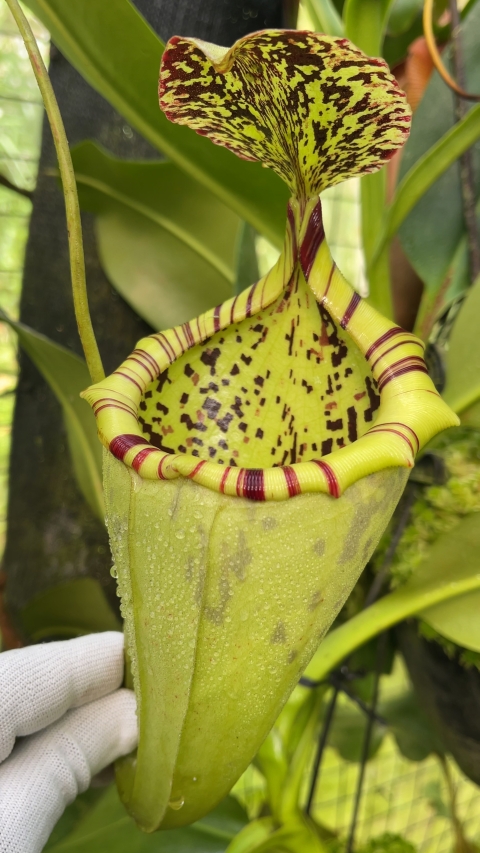
BE-3564
N. burbidgeae x campanulata – assorted clones
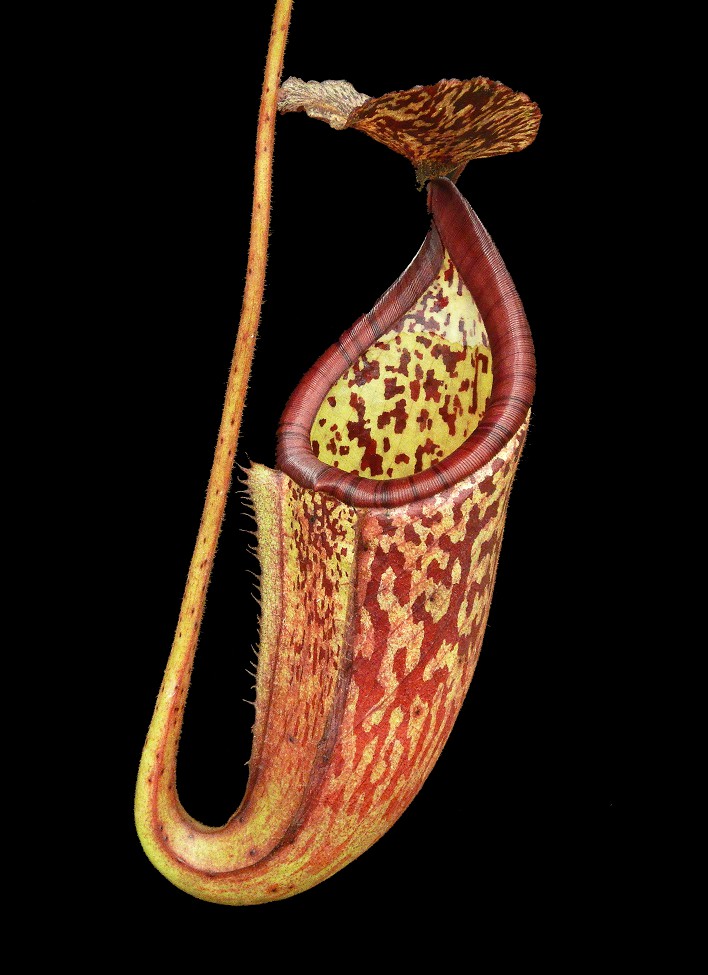
BE-3888
N. burbidgeae x glandulifera - best selected clone
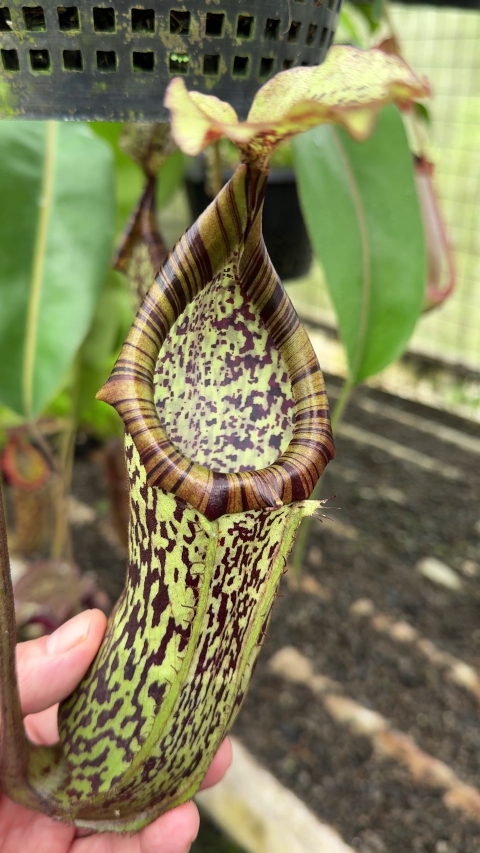
BE-3886
N. burbidgeae x platychila
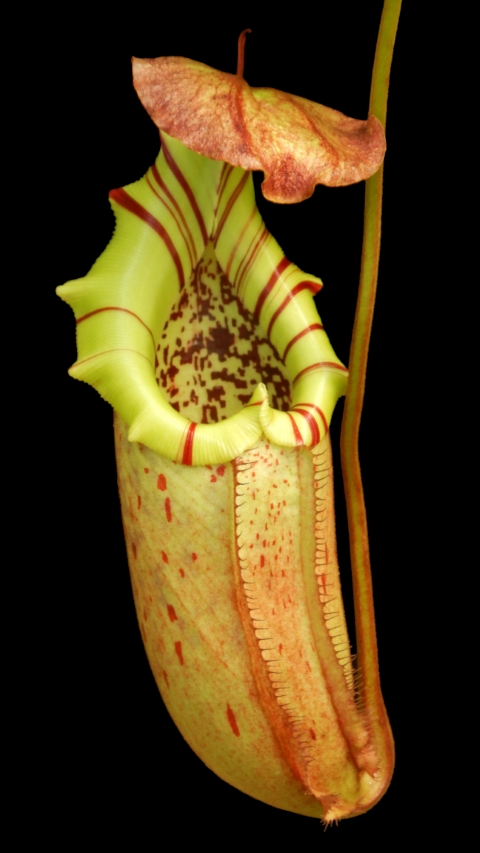
BE-4038
N. burbidgeae x robcantleyi – selected clone
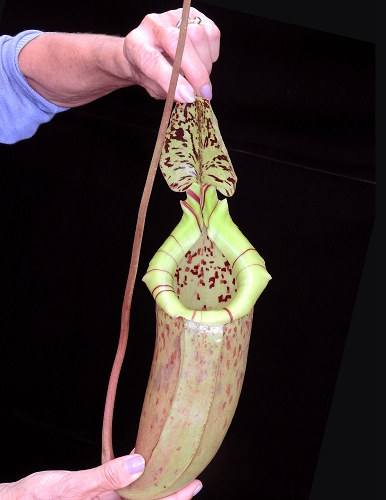
BE-3974
N. burbidgeae x sibuyanensis - assorted clones
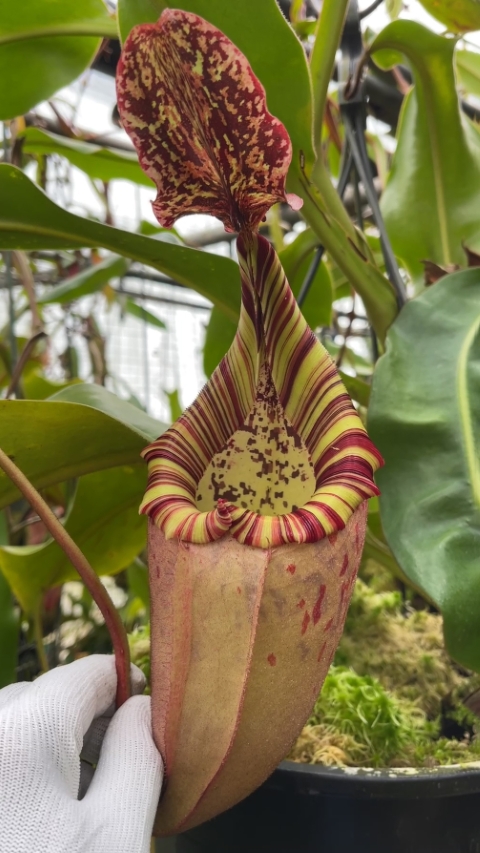
BE-3723
N. burbidgeae x veitchii
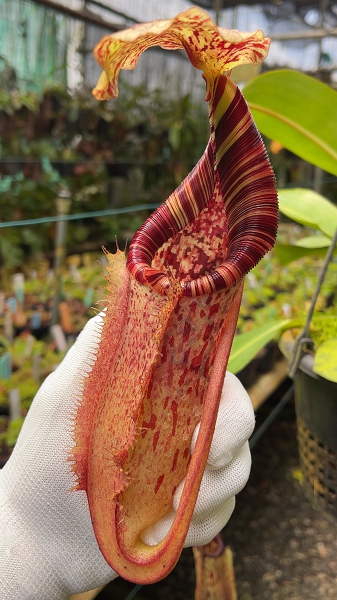
BE-4635
N. (veitchii x lowii) x burbidgeae - assorted clones
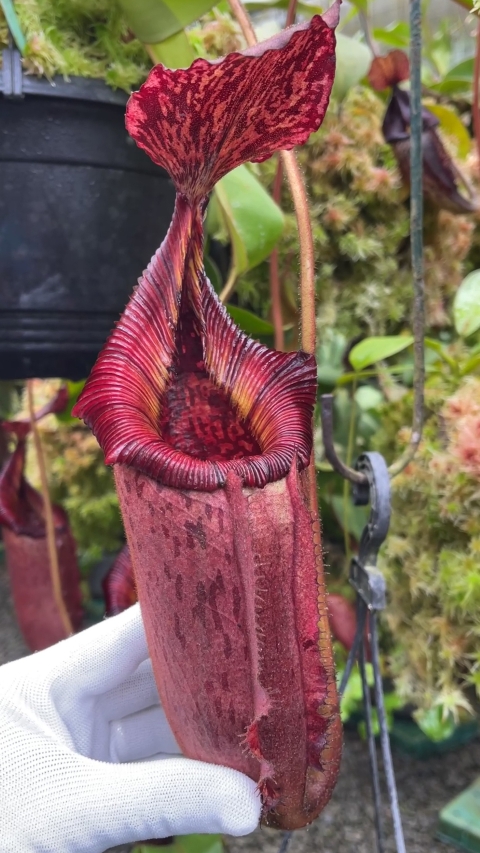
BE-3980
N. (veitchii x lowii) x (burbidgeae x edwardsiana) - assorted clones
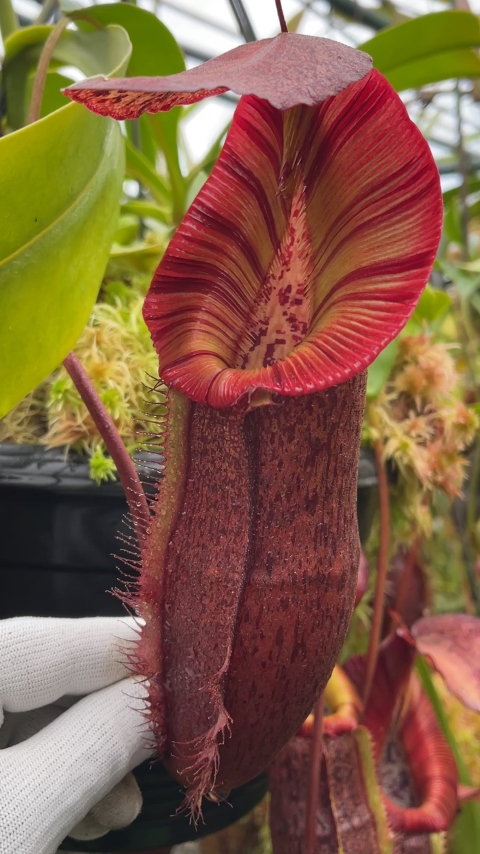
BE-4558
N. singalana x (burbidgeae x edwardsiana) – clone #4
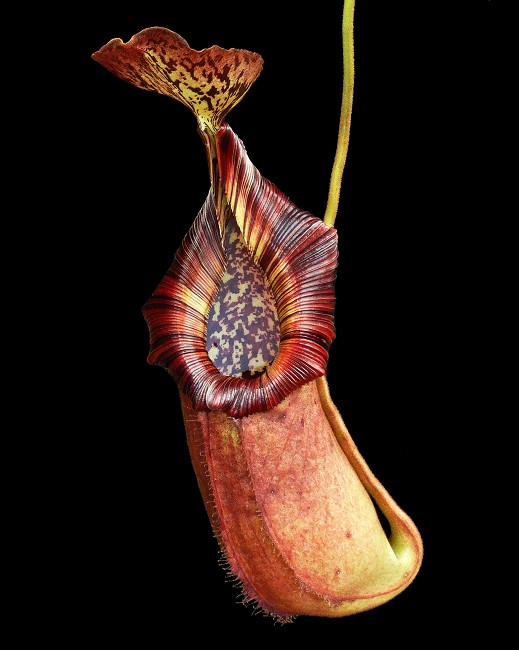
BE-4023
N. robcantleyi x (burbidgeae x edwardsiana) – assorted clones
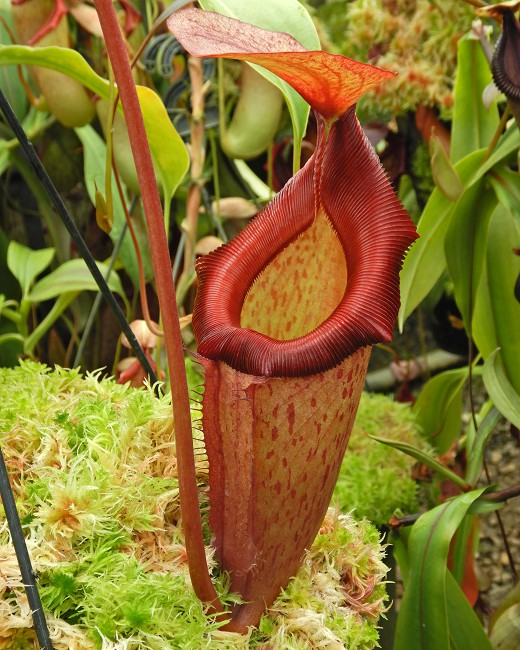
BE-3902
N. rajah x (burbidgeae x edwardsiana) – assorted clones
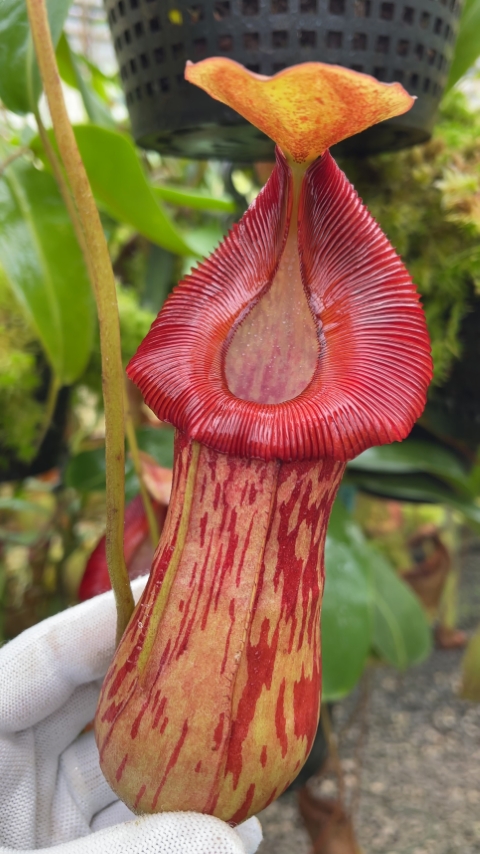
BE-4531
N. burkei x (burbidgeae x edwardsiana) - assorted clones
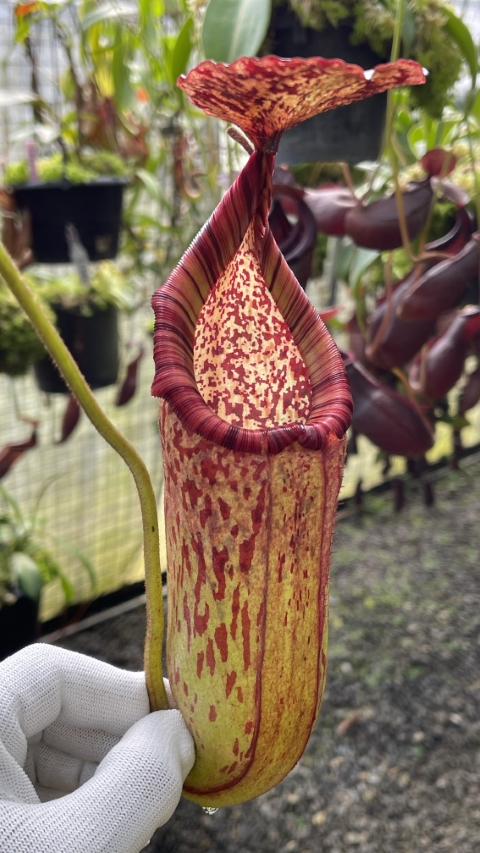
BE-4042
N. burbidgeae x petiolata - assorted clones
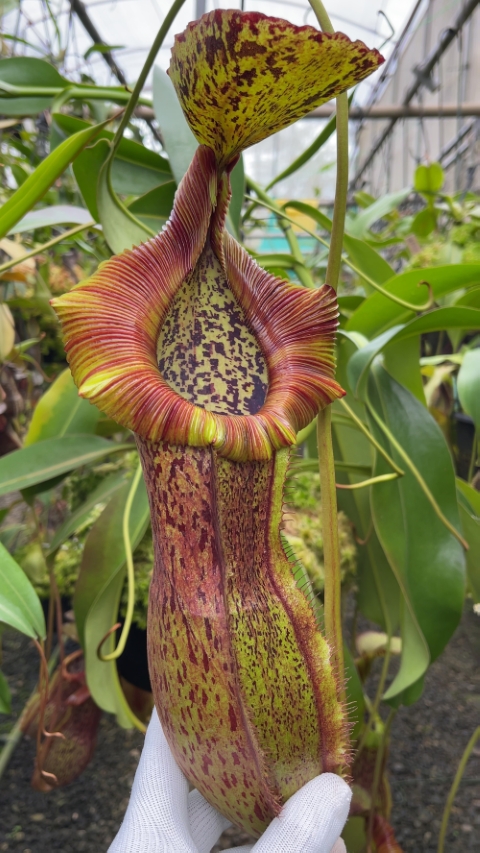
BE-3978
N. spathulata x (burbidgeae x edwardsiana)
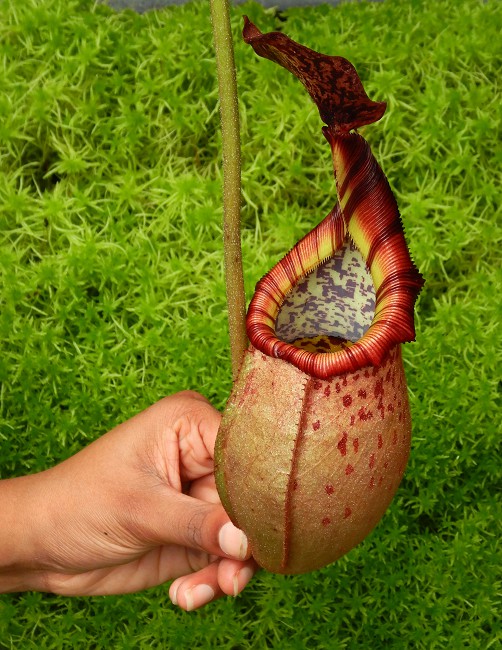
BE-3992
N. (veitchii x mira) x (burbidgeae x edwardsiana) - assorted clones
Crossed N. Burbidgeae with another species?
Register the cross — if it's not yet documented you'll be the first contributor. If someone already registered it, you'll be redirected to add your photo.