JeremiahsCPs at English Wikipedia · Public domain
About
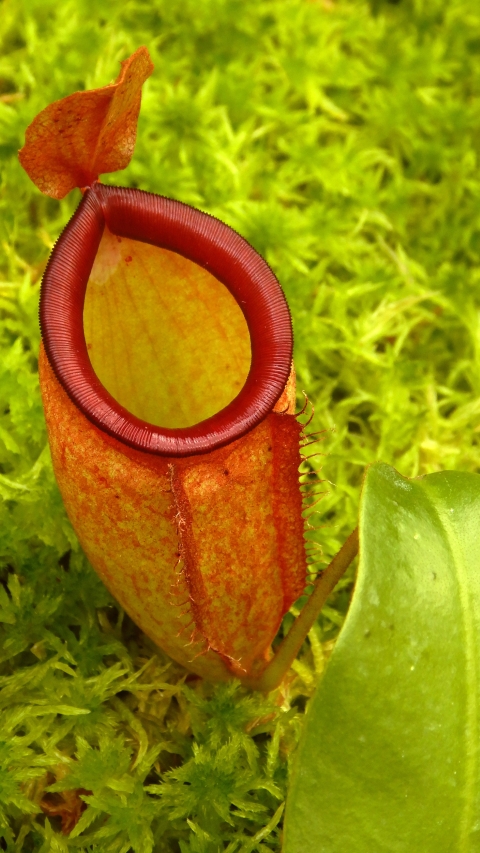
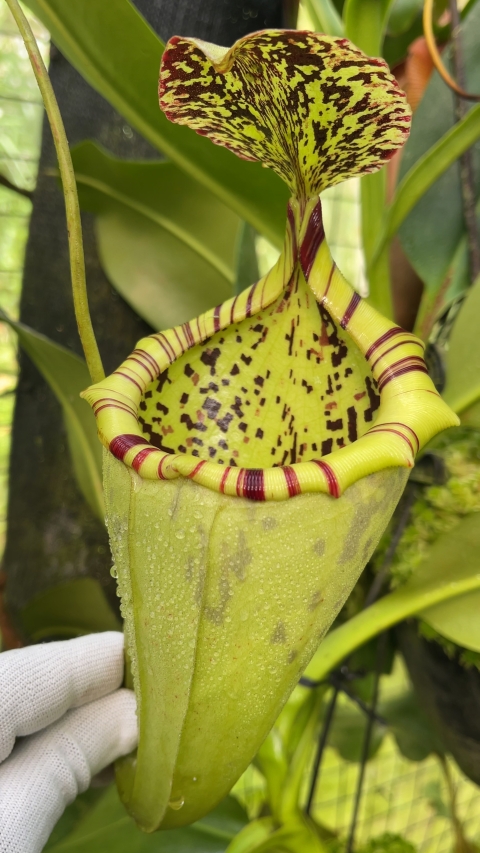
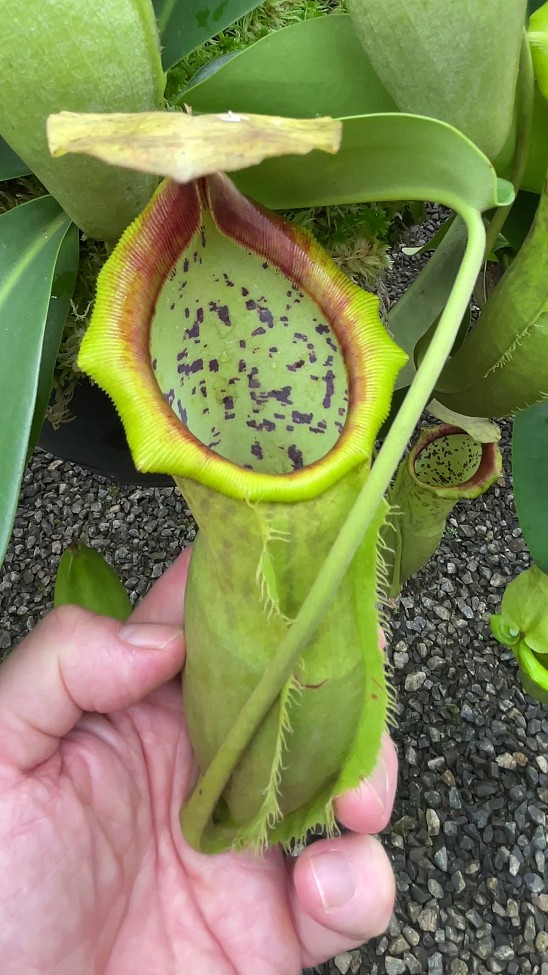
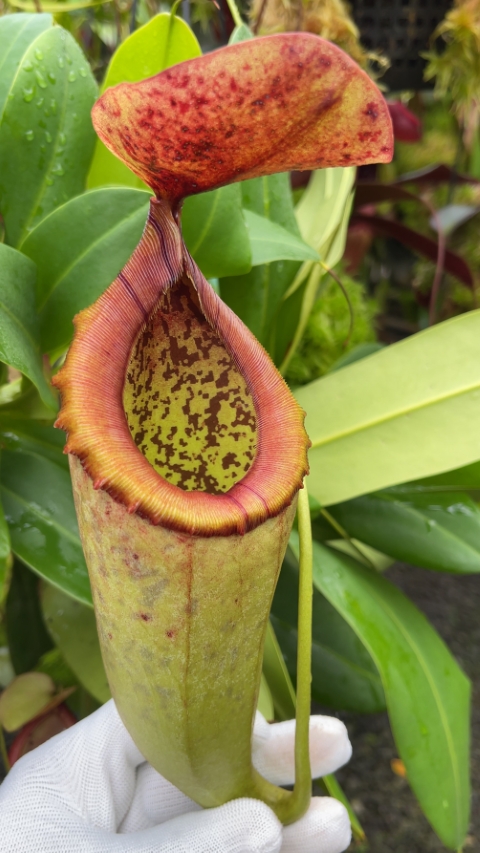
A notable bell-shaped pitcher-plant, *Nepenthes campanulata* is characterized by its unique, yellow-green, bell-shaped pitchers that lack fringed wings and bear a pair of ribs. It is a lowland species endemic to limestone substrates, making its habitat highly specific.
Field notes
Morphology
The plant produces short, cylindrical, climbing stems (20 to 50 cm tall, up to 4 mm thick) with coriaceous, sessile, spathulate-lanceolate leaves (up to 12 cm long, 2 cm across). The pitchers are yellow-green, growing to 10 cm in height and 5.5 cm in diameter, and are wholly glabrous. They feature a greatly reduced peristome with a row of tiny teeth, and the lid has an unbranched, 1 mm long spur at its base.
Distribution & habitat
Lowland species found on limestone cliffs, inhabiting damp, mossy areas at elevations of 100–300 m above sea level. It is native to Borneo, with reports of similar populations from Palawan, the Philippines.
History & etymology
First collected on 9 September 1957 by A.J.G. 'Doc' Kostermans. The species was formally described by Shigeo Kurata in 1973 based on a single specimen. The name *campanulata* comes from the Late Latin *campānulātus*, meaning 'bell-shaped'.
Conservation
Listed as Vulnerable on the 2014 IUCN Red List of Threatened Species. Its original population was destroyed by forest fires in 1983, and all known populations were killed off by 1992.
Habitat
- Altitude
- 100–300 m
- Altitude Class
- lowland
- Native To
- Malaysia, Indonesia
- IUCN Status
- Vulnerable
Taxonomy
- Described
- 1973
- Authority
- Sh.Kurata
Cultivation
- Difficulty
- intermediate
- Temperature
- Day 28–35°C / Night 20–28°C
- Humidity
- 70–90%
Crossed N. Campanulata with another species?
Register the cross — if it's not yet documented you'll be the first contributor. If someone already registered it, you'll be redirected to add your photo.