Alfindra Primaldhi · CC BY 2.0
About
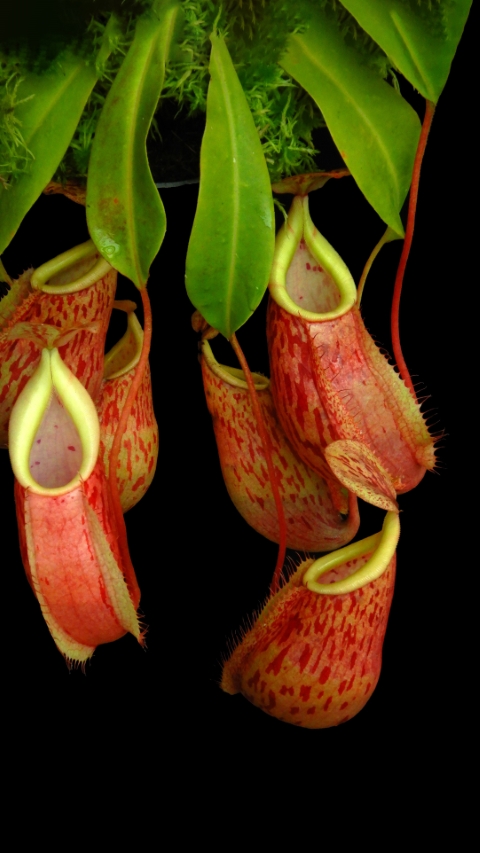
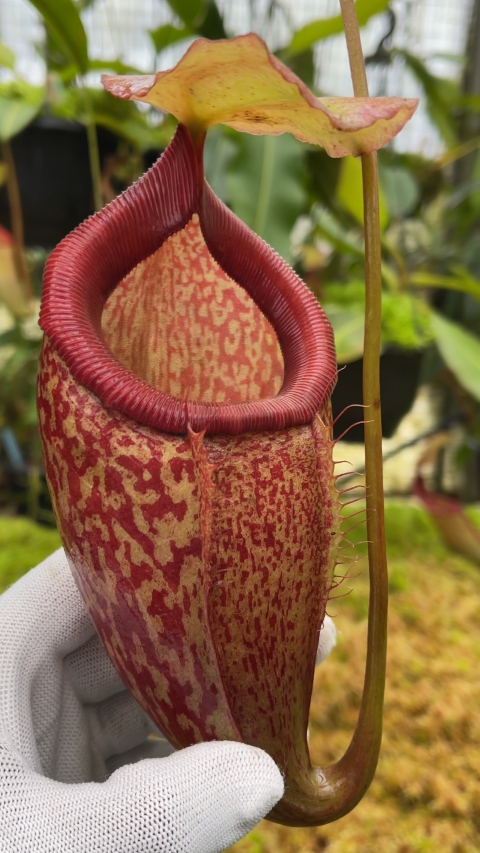
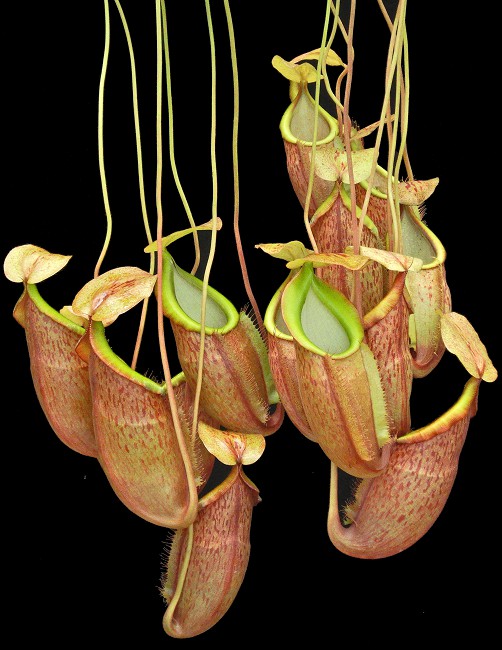
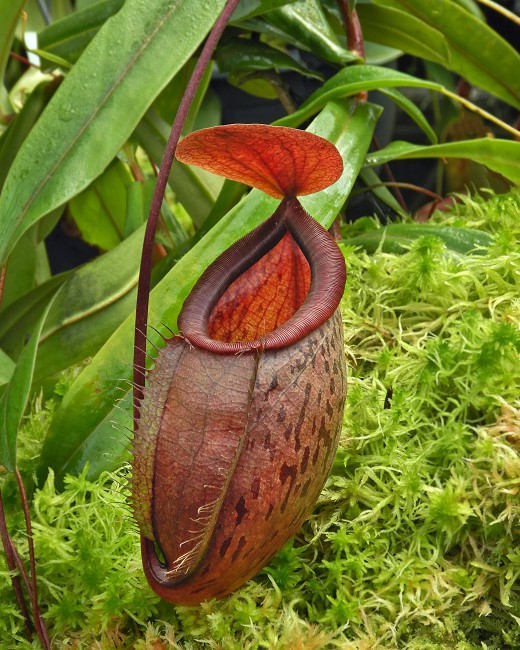
A notable species for collectors, *Nepenthes glabrata* is characterized by its distinctive upper pitchers, which feature well-developed, wing-like structures but lack fringe elements. It is a climbing plant that grows to impressive heights and is endemic to the high forests of Sulawesi.
Field notes
Morphology
The plant is a climbing species growing up to 13 m high. The upper pitchers are shortly cylindrical to slightly infundibular, reaching up to 14 cm in height and 3 cm in width. A key feature is the well-developed wings (up to 10 mm wide) that lack fringe elements. The peristome is narrow and cylindrical (up to 2.5 mm wide), bearing fine ribs but unusually lacking teeth on the inner margin. The operculum is suborbicular (up to 2.8 cm by 3.1 cm) and displays unusual palmate nervation.
Distribution & habitat
Endemic to Central Sulawesi, growing in open, high forest at elevations ranging from 1,600 to 2,100 m.
Cultivation notes
Hobbyists have distinguished two forms: 'Palo Alto,' which produces more compact pitchers and narrow leaves that turn purple under high light levels, and 'Forestville,' which has somewhat larger pitchers, particularly aerial ones.
History & etymology
The species was described following two near-concurrent publications: one by Shigeo Kurata (N. rubromaculata) in 1984, and the second by John R. Turnbull and Anne T. Middleton as N. glabratus, four days later. The name *Nepenthes glabrata* is the correct designation.
Conservation
Least concern (IUCN Red List of Threatened Species, 2015).
Habitat
- Altitude
- 1,600–2,100 m
- Altitude Class
- highland
- Native To
- Sulawesi
- IUCN Status
- Least Concern
Taxonomy
- Described
- 1984
- Authority
- J.R.Turnbull & A.T.Middleton
Cultivation
- Difficulty
- intermediate
Crossed Nepenthes glabrata with another species?
Register the cross — if it's not yet documented you'll be the first contributor. If someone already registered it, you'll be redirected to add your photo.