Alfindra Primaldhi · CC BY 2.0
About
Nepenthes klossii is a tropical pitcher plant endemic to New Guinea, known for its scrambling vine habit and distinctive pitchers. It is a species that can be found in high altitude swampy forest environments.
Field notes
Morphology
The plant is a scrambling vine with coriaceous, petiolate leaves, which are oblong-lanceolate and up to 25 cm long. Upper pitchers are narrowly infundibular, reaching up to 26 cm high and 7 cm wide, and arise from the ends of long tendrils. The pitchers feature a flattened peristome and a suborbicular lid that is wholly glandular. The plant also produces a racemose inflorescence with oblong tepals.
Distribution & habitat
This species is endemic to the Indonesian province of Papua in New Guinea, having been recorded in the regencies of Merauke and Paniai, and on the lower slopes of Puncak Jaya. It exhibits a wide altitudinal distribution, ranging from 930 to 2,000 m above sea level, and can be found in high altitude swampy forest or grassland.
Ecology
The plant's carnivory is suggested to involve attracting small flying insects using domed pitchers with white patches that allow sunlight to illuminate the interior. Prey are reportedly disoriented inside the pitchers, eventually falling into the fluid. While a comprehensive study is lacking, the primary prey consists of small flying insects attracted to light sources.
Cultivation notes
The source material does not provide specific details on temperature range, humidity, or growth rate for cultivation. It is noted to be a scrambling vine that can climb to several meters in height.
History & etymology
Nepenthes klossii was first discovered in southwestern New Guinea during the Wollaston Expedition of 1912–1913. It was formally described in 1916 by Henry Nicholas Ridley, who noted its resemblance to *N. maxima* but distinct hairiness. A revised description was later published by B. H. Danser in 1928.
Conservation
The species is listed as Endangered on the 2014 IUCN Red List of Threatened Species. Its habitat is greatly threatened by planned development, including a road planned to run through its population, making assessment difficult due to its poor knowledge.
Habitat
- Altitude
- 930–2,000 m
- Altitude Class
- intermediate
- Native To
- Indonesia
- IUCN Status
- Endangered
Taxonomy
- Described
- 1916
- Authority
- Ridl.
Cultivation
- Difficulty
- difficult
- Temperature
- Day 22–30°C / Night 15–22°C
- Humidity
- 75–90%
Borneo Exotics 12 listings
View all →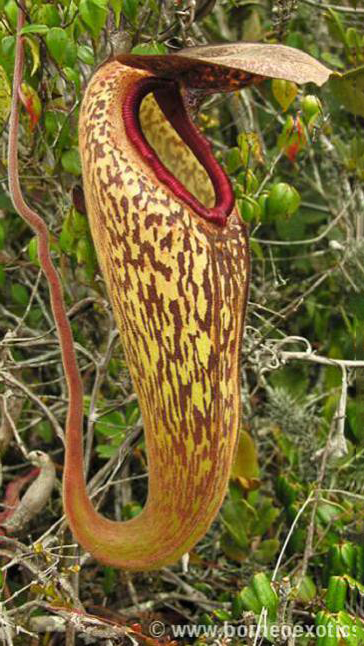
BE-3452
N. klossii - confirmed true clone
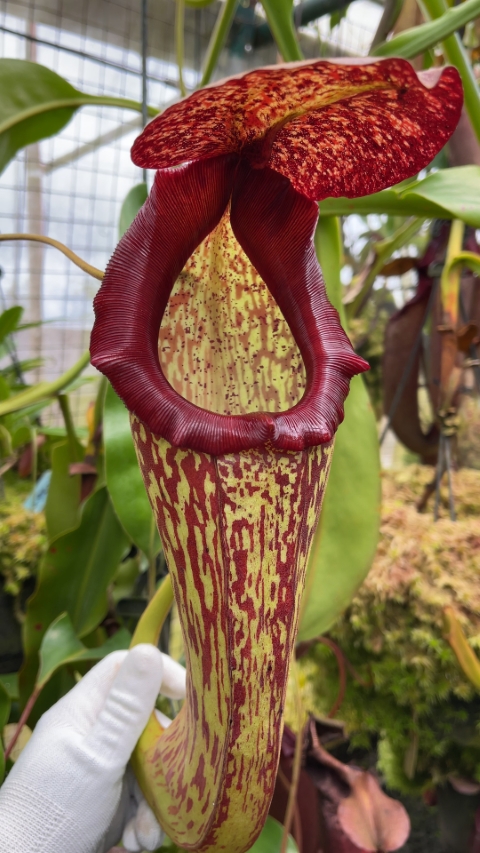
BE-4530
N. boschiana x klossii
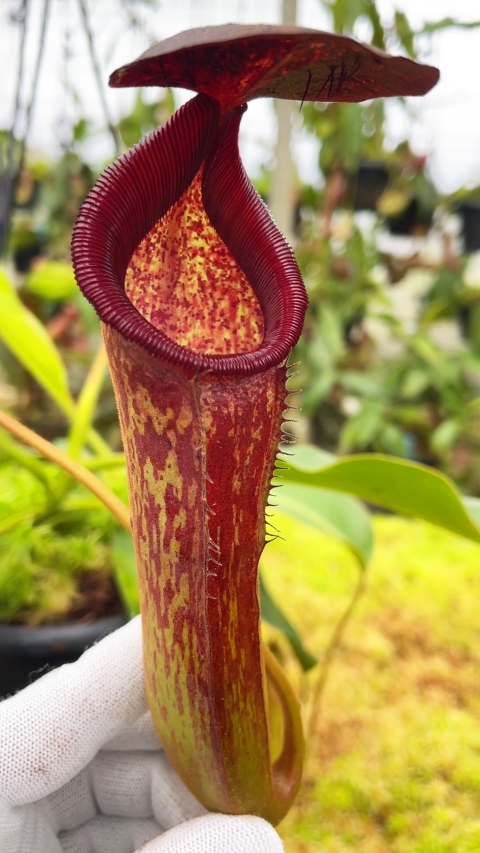
BE-4634
N. klossii x lowii
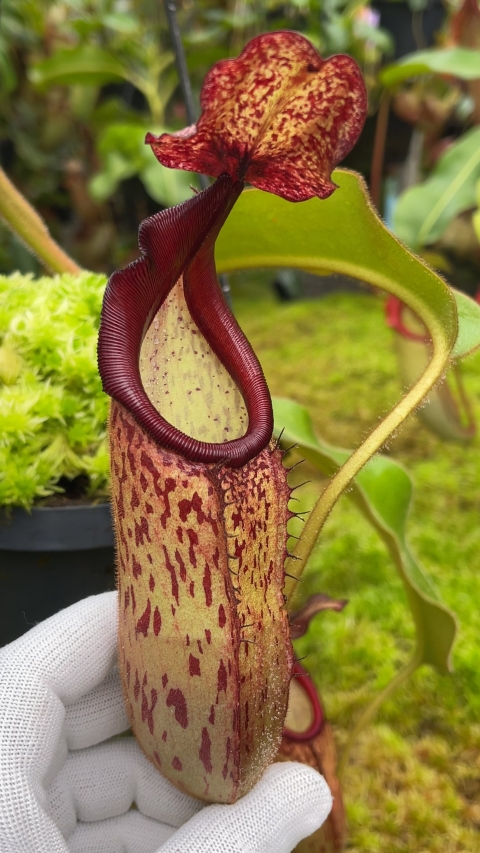
BE-4632
N. klossii x veitchii
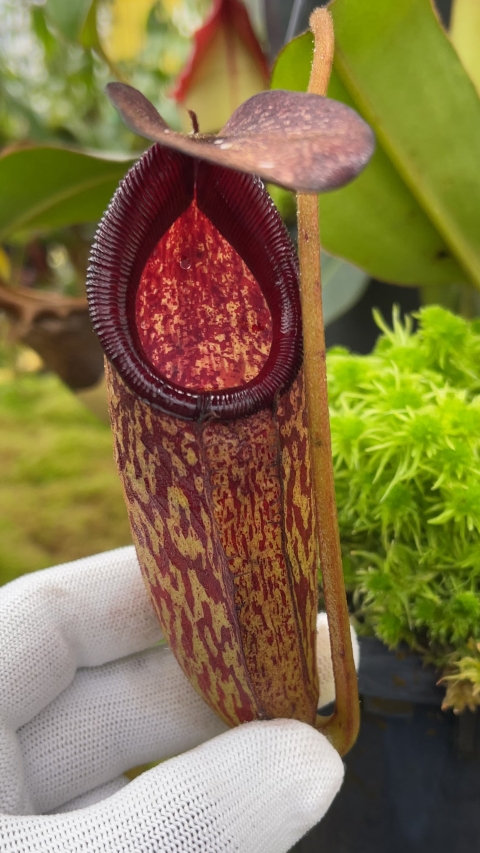
BE-4071
N. rajah x klossii
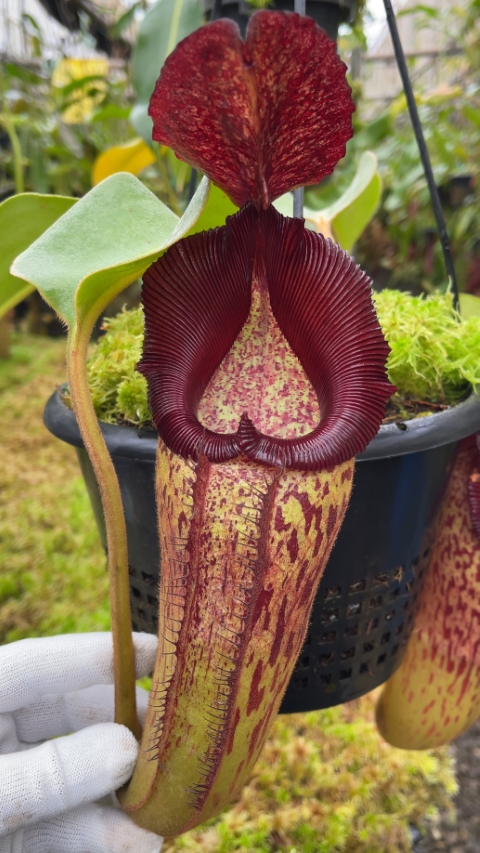
BE-4549
N. robcantleyi x klossii - assorted clones
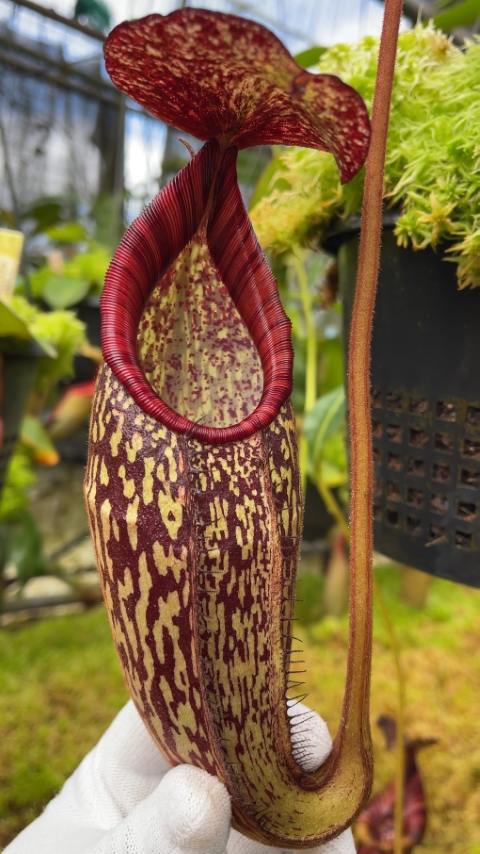
BE-4648
N. spectabilis x klossii – assorted clones
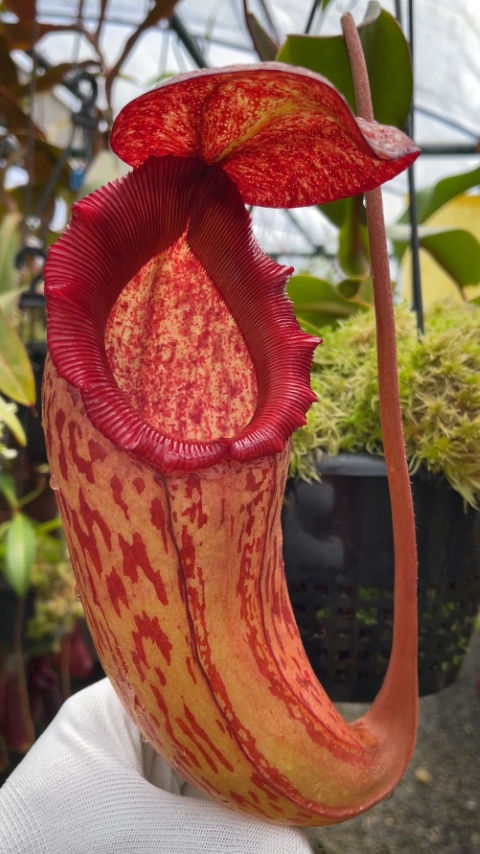
BE-4566
N. sibuyanensis x klossii
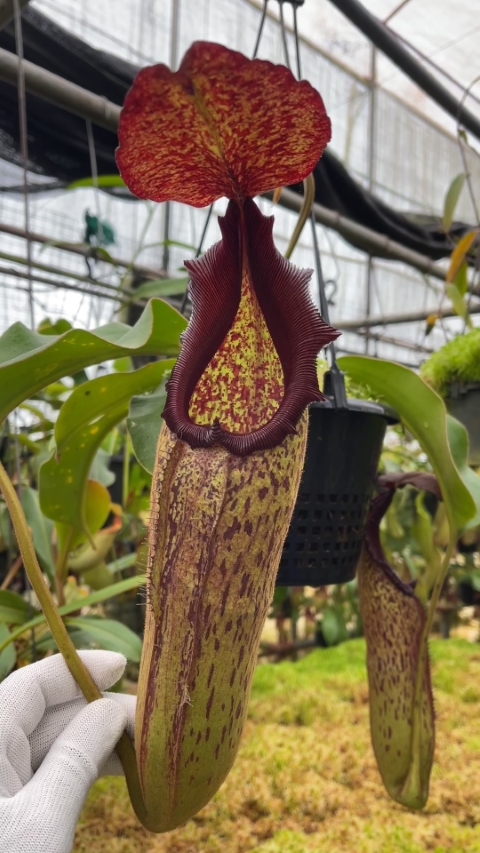
BE-4690
N. klossii x robcantleyi – assorted clones
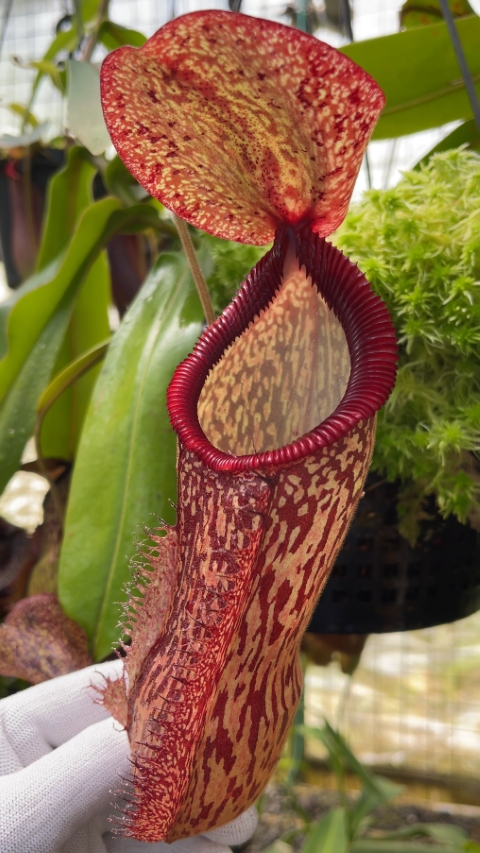
BE-4562
N. hamata x klossii
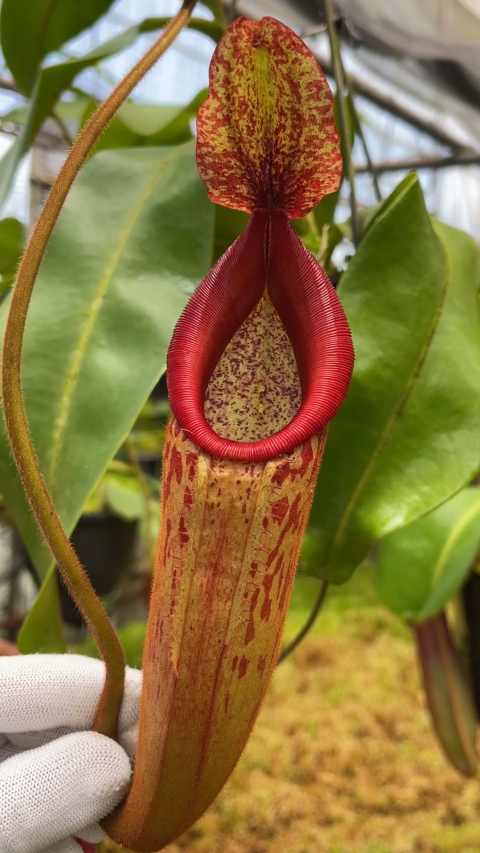
BE-4548
N. (veitchii x mira) x klossii - assorted clones
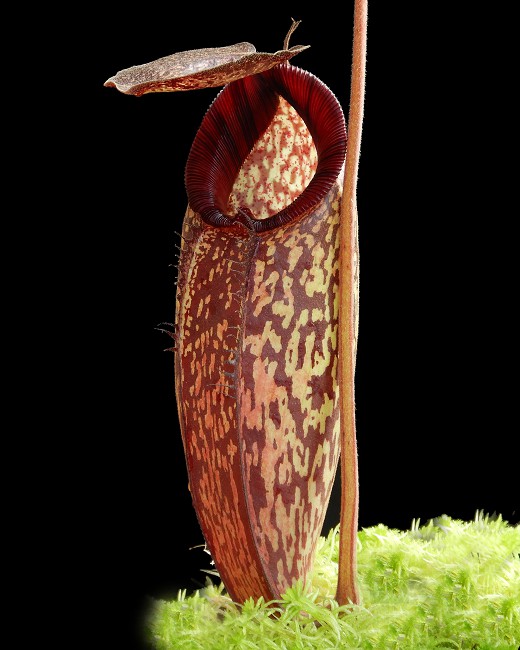
BE-4583
N. (aristolochioides x spectabilis) x klossii – assorted clones
Crossed N. Klossii with another species?
Register the cross — if it's not yet documented you'll be the first contributor. If someone already registered it, you'll be redirected to add your photo.