Kleo Marlo Sialongo · CC BY 2.0
About
A distinctive tropical pitcher plant, *Nepenthes peltata* is notable for its unique peltate tendril attachment and conspicuous indumentum. It typically produces large, ovoid pitchers featuring a prominent basal crest and large nectar glands on the lid.
Field notes
Morphology
The scrambling plant grows to a height of up to 1 m, with stems recorded up to 3 m long. The oblong lamina measures up to 50 cm by 9 cm, featuring a dark red lower surface contrasting with the dark green upper surface. Rosette and lower pitchers are large, ranging from ellipsoidal to ovate, reaching 28 cm in height by 16 cm in width. The peristome is cylindrical up to 2 cm wide and bears ribs up to 1.5 mm high. The operculum is ovate to elliptic (up to 8 cm by 6 cm) and has a triangular basal crest and scattered giant nectar glands. The species has a racemose inflorescence up to 75 cm in length.
Distribution & habitat
Endemic to the upper slopes of Mount Hamiguitan on the island of Mindanao in the Philippines, with an altitudinal range from 865 m to 1635 m.
Ecology
The species grows terrestrially in upper montane mossy forest, secondary vegetation, ridge tops, and cliff sides. It is restricted to ultramafic substrates and grows best under direct sunlight, though it tolerates shade. The pitchers feature large nectar glands and a prominent basal crest, suggesting a specialized trapping mechanism.
History & etymology
The species was formally described by Shigeo Kurata in the January 2008 issue of the Journal of Insectivorous Plant Society. The specific epithet peltata is Latin for "peltate," referring to the distinctive tendril insertion.
Conservation
Currently considered 'not threatened' due to its extensive populations on Mount Hamiguitan, although its future is tied to the successful designation of Mount Hamiguitan as a UNESCO World Heritage Site.
Habitat
- Altitude
- 865–1,635 m
- Altitude Class
- intermediate
- Native To
- Philippines
- IUCN Status
- Critically Endangered
Taxonomy
- Described
- 2008
- Authority
- Sh.Kurata
Cultivation
- Difficulty
- intermediate
- Temperature
- Day 22–30°C / Night 15–22°C
- Humidity
- 75–90%
Borneo Exotics 7 listings
View all →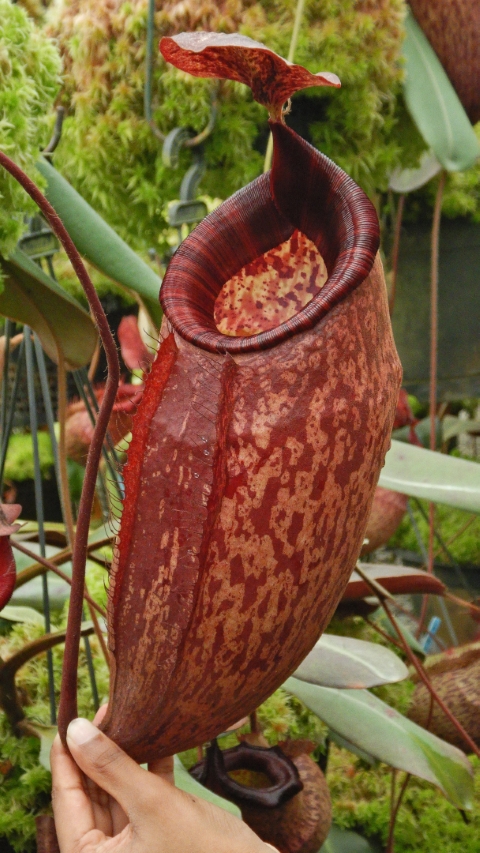
BE-4613
N. peltata – best selected clone
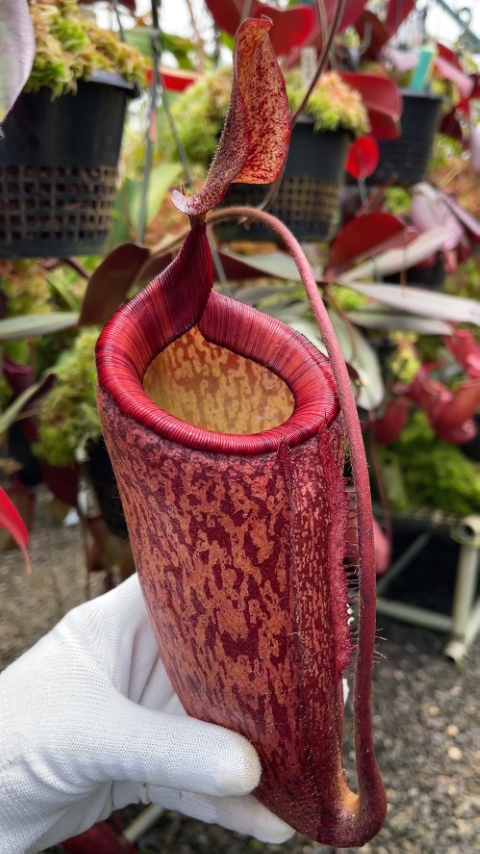
BE-4601
N. peltata x attenboroughii - assorted clones
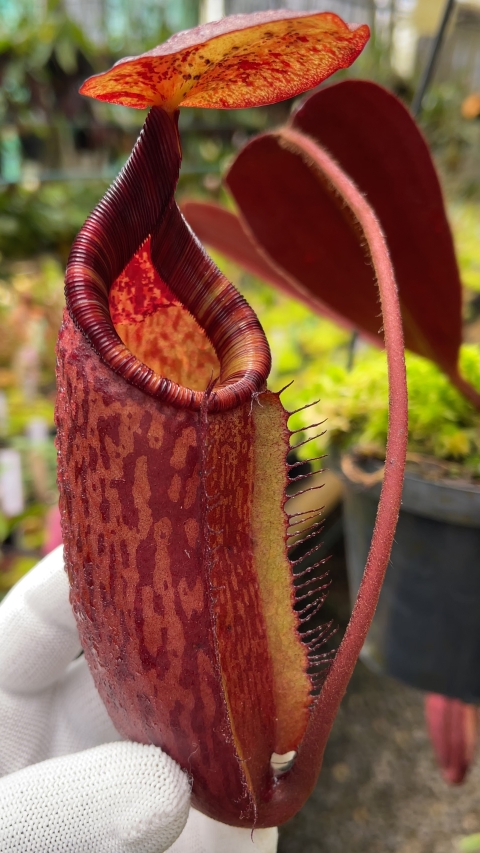
BE-4654
N. peltata x ephippiata - assorted clones
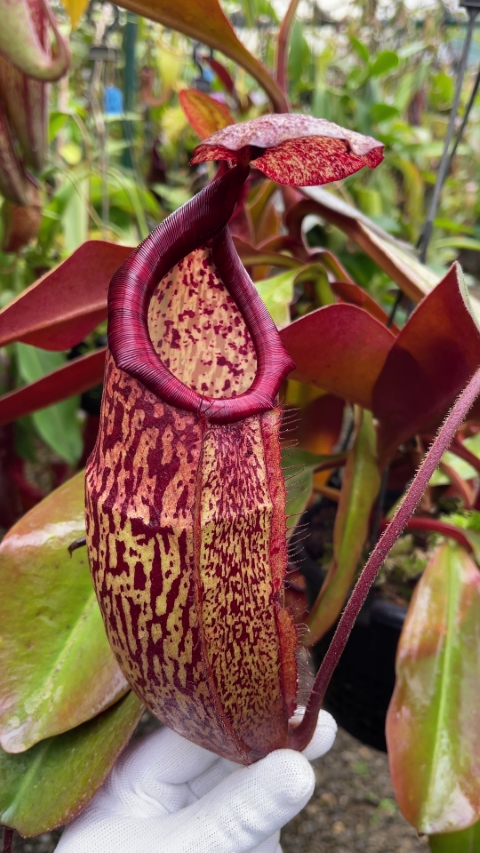
BE-4024
N. peltata x samudera - assorted clones
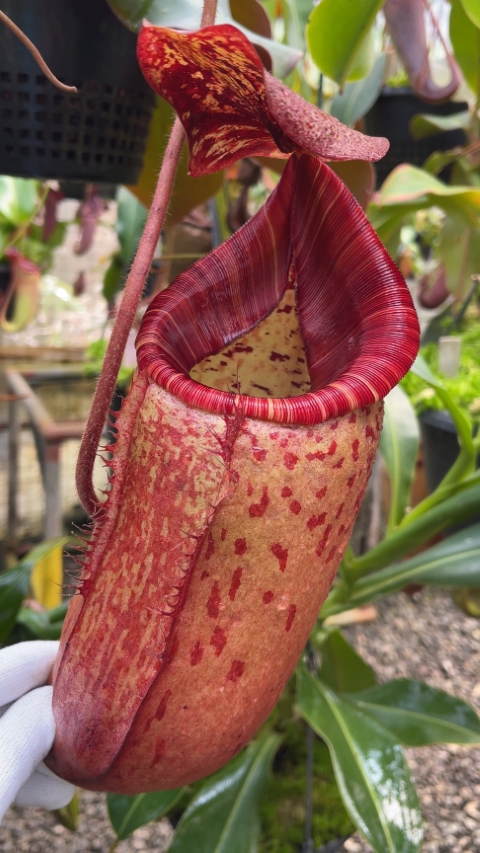
BE-4516
N. peltata x (veitchii x lowii)
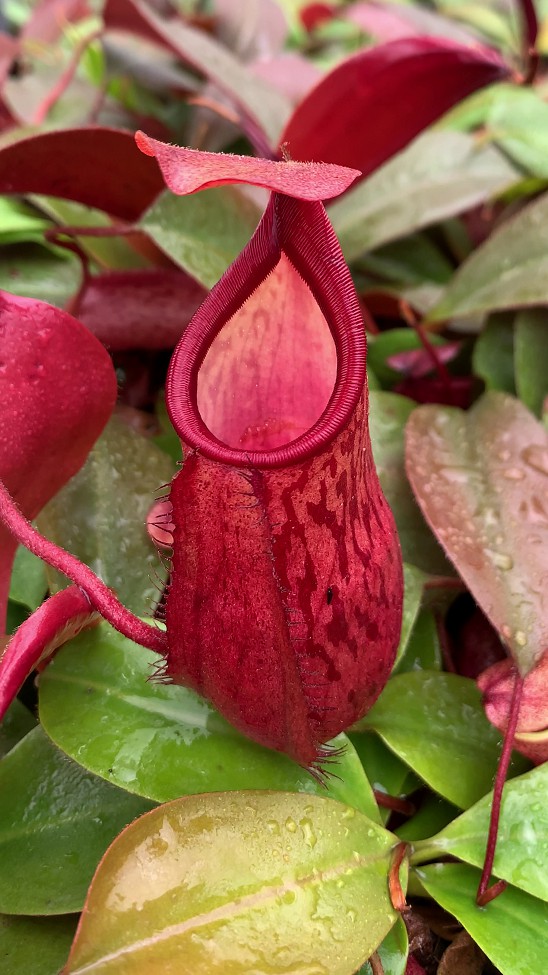
BE-4534
N. mira x peltata – assorted clones
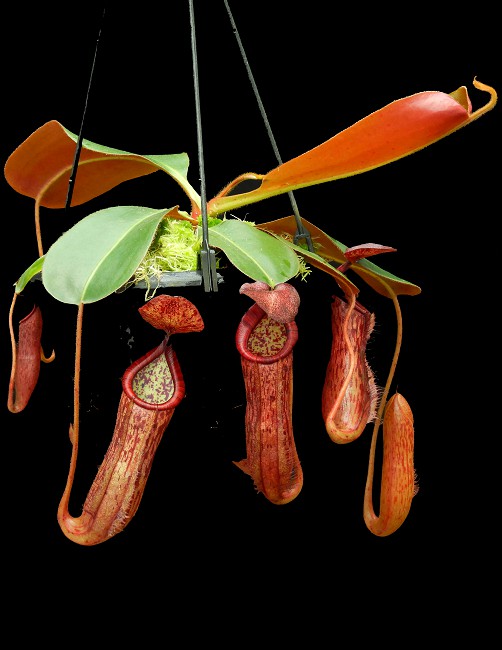
BE-4560
N. glandulifera x peltata - assorted clones
Crossed N. Peltata with another species?
Register the cross — if it's not yet documented you'll be the first contributor. If someone already registered it, you'll be redirected to add your photo.