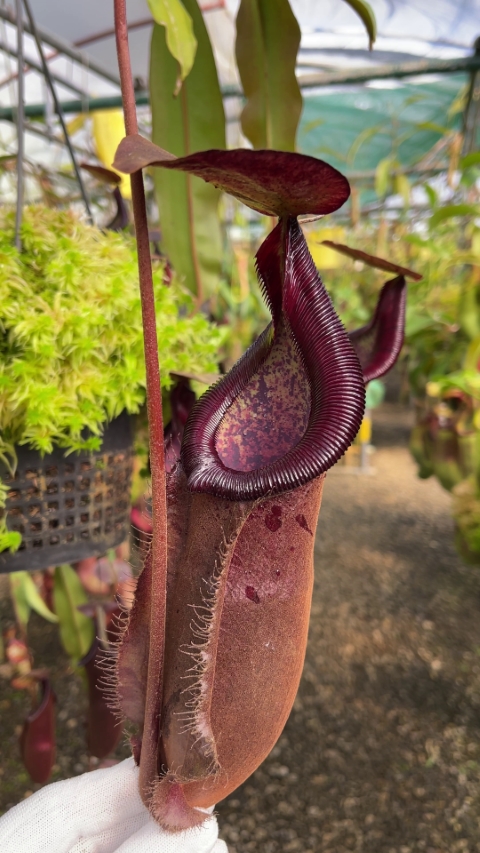
Detail of the peristome on a lower pitcher.
en:User:Rbrtjong · Public domain
About
A highly variable and popular species, *Nepenthes rafflesiana* is known for its ability to produce enormous pitchers, sometimes rivaling the size of *N. rajah*. It is a scrambling vine that thrives in tropical lowlands and is often recommended as a beginner's plant.
Field notes
Morphology
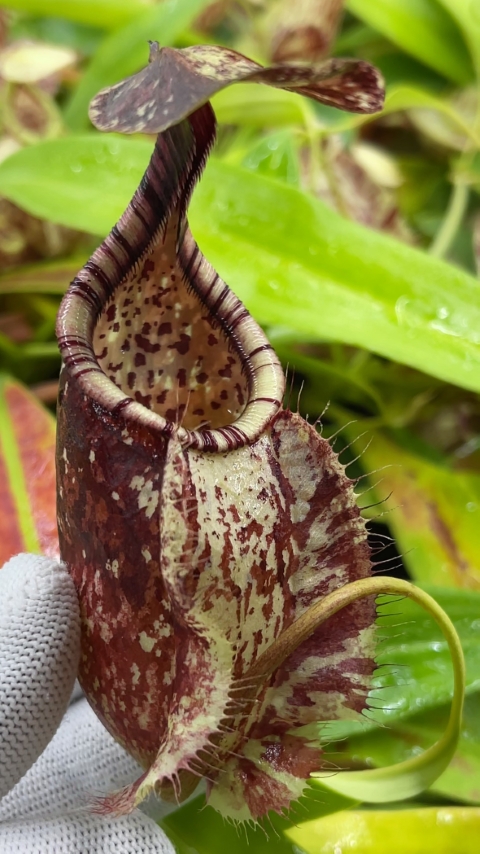
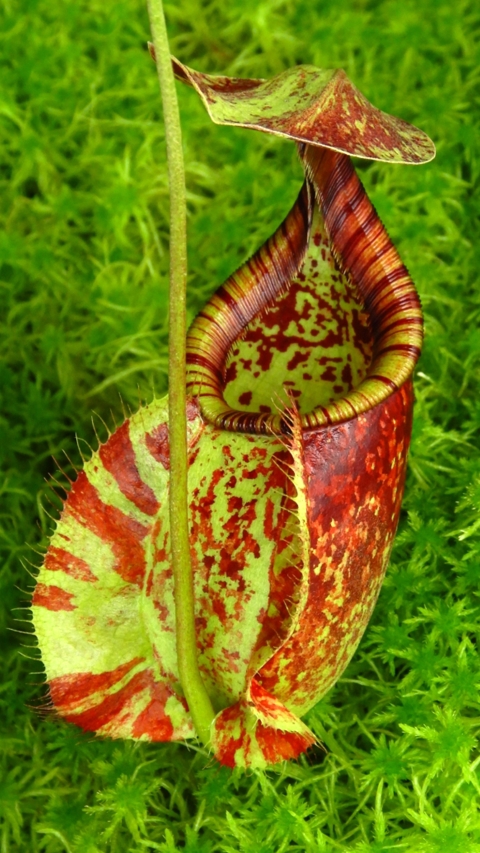
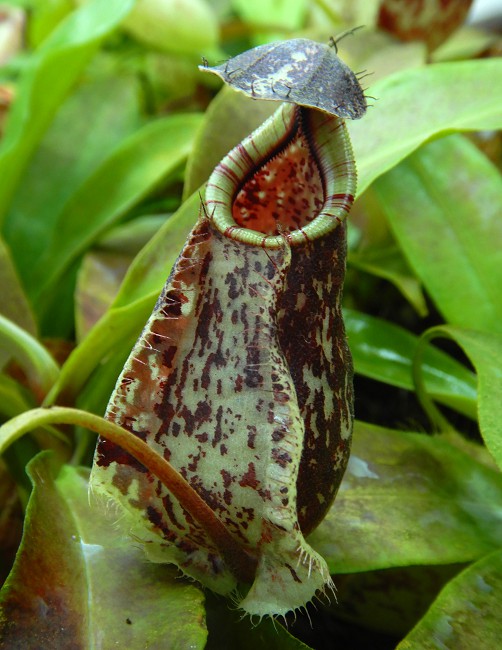
The plant is a scrambling vine with stems that can climb up to 15 m and tendrils over 110 cm long. Lower pitchers are bulbous with fringed wings, rarely exceeding 20 cm in height, but the giant form can reach 35 cm long and 15 cm wide. Upper pitchers are funnel-shaped and often feature a distinctive raised section on the peristome. Pitcher color varies greatly from dark purple to white, though the typical form is light green with heavy purple blotches on the lower pitchers and cream-colored aerial pitchers.
Distribution & habitat
Widespread lowland species found in Borneo, Sumatra, Peninsular Malaysia, and Singapore. It is common in Borneo and parts of the Riau Archipelago, and has been recorded from the west coast of Sumatra, as well as on smaller islands like Bangka, Labuan, Natuna, and the Lingga Islands. It grows at elevations ranging from sea-level to 1,200 m.
Ecology
The species is a passive carnivore that captures insects by luring them into its pitchers using a sweet-tasting nectar secreted by the peristome. Once inside, the prey drowns in the slippery walls, and digestive enzymes break down the material for nutrient absorption. This carnivorous habit is thought to be an adaptation to nutrient-poor soils.
Cultivation notes
It is a lowland species that prefers hot, humid conditions, but can be grown as an intermediate with cooler nights and less humidity. It is recommended for new growers and should be kept in shaded conditions with diffuse sunlight. Watering and misting should be done frequently with distilled water, and the medium must be wet and well-draining. Feeding can be done with freeze-dried bloodworms or Koi pellets, but never with mammalian meat.
History & etymology
The species was discovered by Dr. William Jack in 1819. At the time, the largest known species in the genus was described in the Gardener's and Farmer's Journal for 1850 as one of the most magnificent of the genus.
Habitat
- Altitude
- 0–1,200 m
- Altitude Class
- intermediate
- Native To
- Malaysia, Indonesia, Brunei, Singapore
- IUCN Status
- Least Concern
Taxonomy
- Described
- 1835
- Authority
- Jack
Cultivation
- Difficulty
- easy
- Temperature
- Day 28–35°C / Night 20–28°C
- Humidity
- 70–95%
Borneo Exotics 5 listings
View all →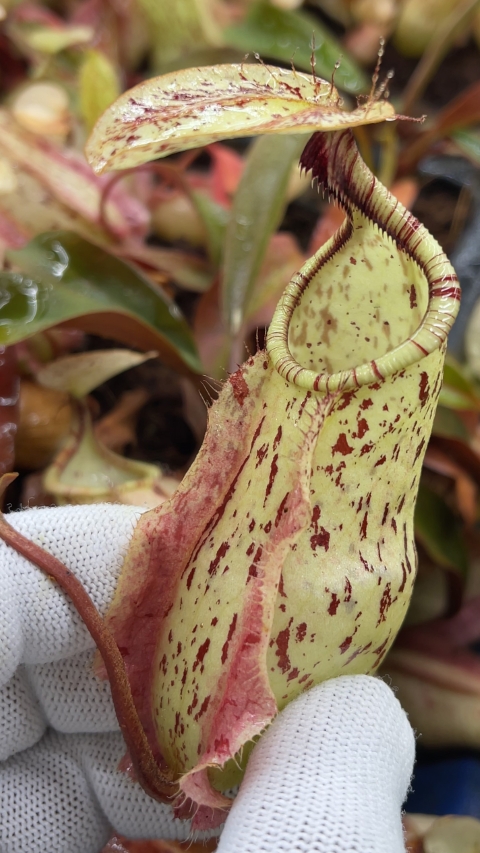
Crossed N. Rafflesiana with another species?
Register the cross — if it's not yet documented you'll be the first contributor. If someone already registered it, you'll be redirected to add your photo.