A rare upper pitcher
Attenboroughii at English Wikipedia · CC BY 3.0
About
A notable tropical pitcher plant endemic to Sibuyan Island in the Philippines, *Nepenthes sibuyanensis* is characterized by its weak climbing habit and distinctive, large, ovate to infundibuliform lower pitchers. The species is particularly recognized for its dense, stellate indumentum on the inflorescence and its unique seed morphology.
Field notes
Morphology
The plant is a weak climber with stems up to 1.5 m long and 8 mm in diameter. Leaves are thin-coriaceous, linear-lanceolate to slightly spathulate, and may reach 18 cm long. Lower pitchers are ovate to infundibuliform, potentially reaching 26 cm high and 15 cm wide, featuring a pair of ribs and a cylindrical peristome up to 20 mm wide. The lid (operculum) is broadly ovate-cordate, up to 8 cm long and 6.5 cm wide. Upper pitchers are generally smaller and lighter-colored than the lower traps.
Distribution & habitat
Endemic to Sibuyan Island in the Philippines, specifically found on Mount Guiting-Guiting, neighboring Mount Mayo, and the connecting ridge. Altitudinal ranges vary, but are cited between 1,200–1,800 m above sea level.
Ecology
The plant grows sparsely on open slopes dominated by high grasses, small shrubs, and the fern *Dipteris conjugata*. Pitchers typically develop embedded in the substrate and are rarely exposed to direct sunlight. Its seeds lack the papery ends typical of most *Nepenthes* species, an adaptation that allows for water-based dispersion.
History & etymology
The species was formally described by Joachim Nerz in the March 1998 issue of the Carnivorous Plant Newsletter. Earlier observations, predating the formal description, noted the plant in 1911 by Adolph Daniel Edward Elmer.
Conservation
The species is listed as Vulnerable on the 2006 IUCN Red List of Threatened Species due to threats posed by logging and mining operations on Mount Guiting-Guiting and its national park.
Habitat
- Altitude
- 1,250–1,500 m
- Altitude Class
- intermediate
- Native To
- Philippines
- IUCN Status
- Vulnerable
Taxonomy
- Described
- 1998
- Authority
- Nerz
Cultivation
- Difficulty
- difficult
- Temperature
- Day 18–25°C / Night 10–18°C
- Humidity
- 70–95%
Borneo Exotics 10 listings
View all →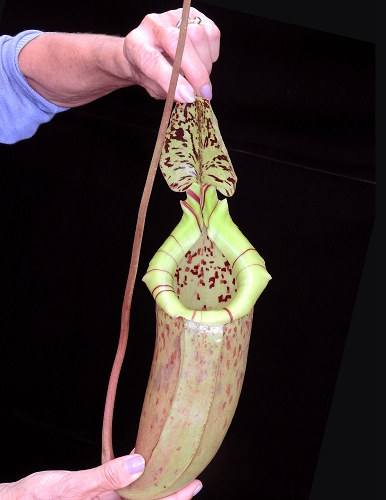
BE-3974
N. burbidgeae x sibuyanensis - assorted clones
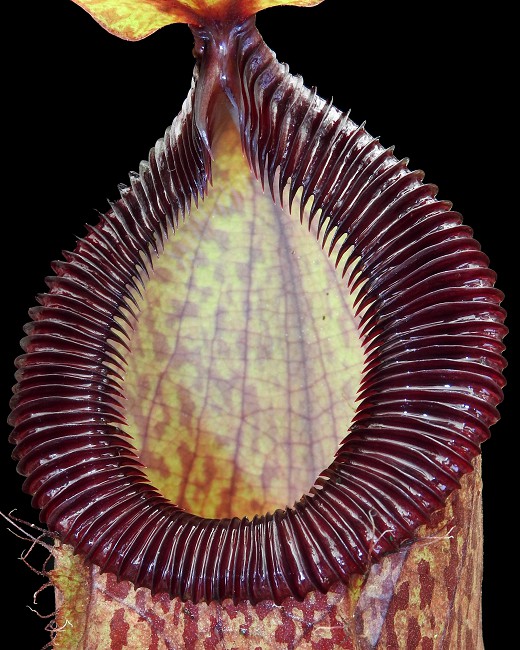
BE-3562
N. sibuyanensis x hamata - assorted clones
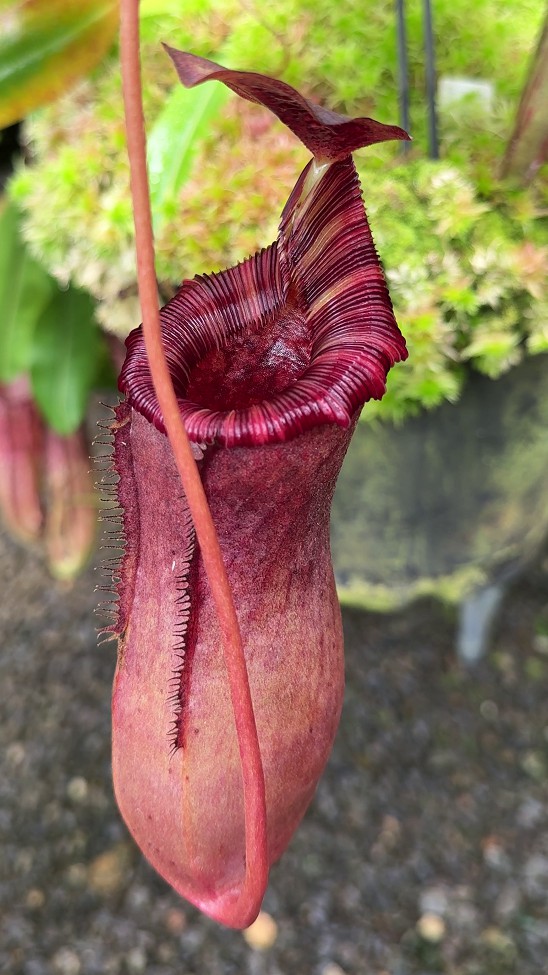
BE-4504
N. sibuyanensis x lowii - assorted clones
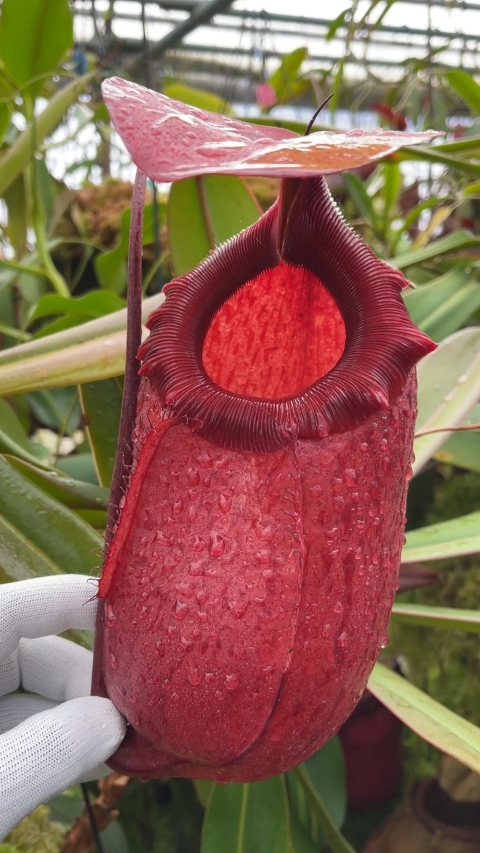
BE-4026
N. sibuyanensis x merrilliana – selected clones
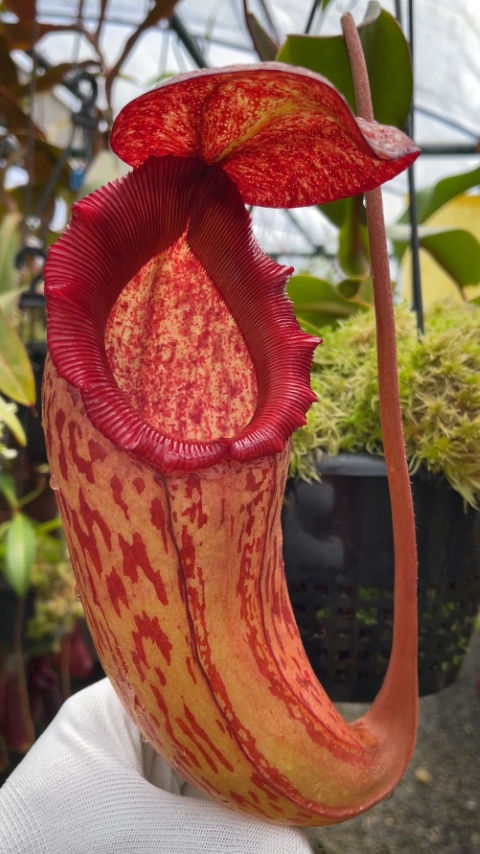
BE-4566
N. sibuyanensis x klossii
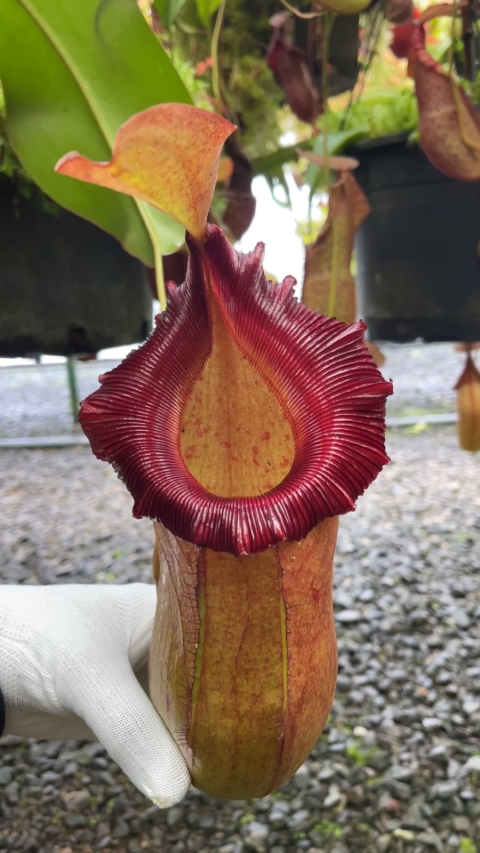
BE-3748
N. robcantleyi x (sibuyanensis x ventricosa)
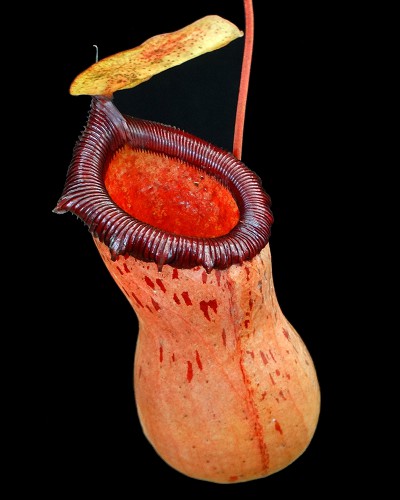
BE-3757
N. ventricosa x sibuyanensis – best selected clone
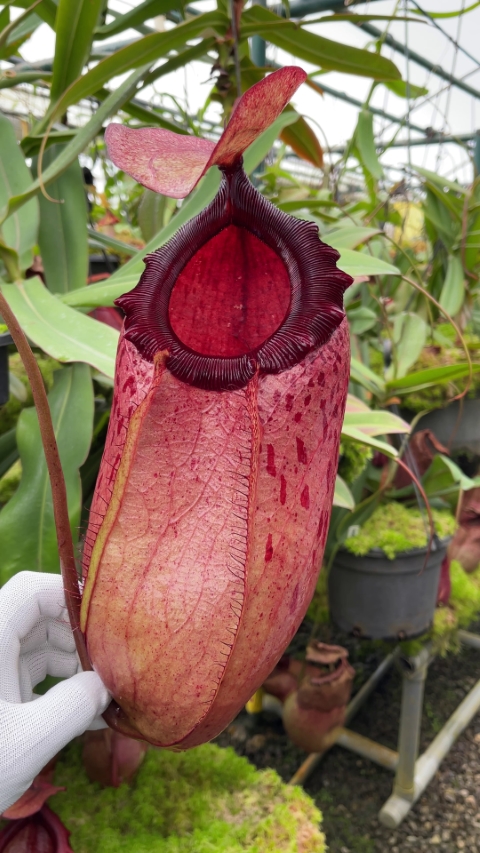
BE-3542
N. sibuyanensis x merrilliana – assorted clones
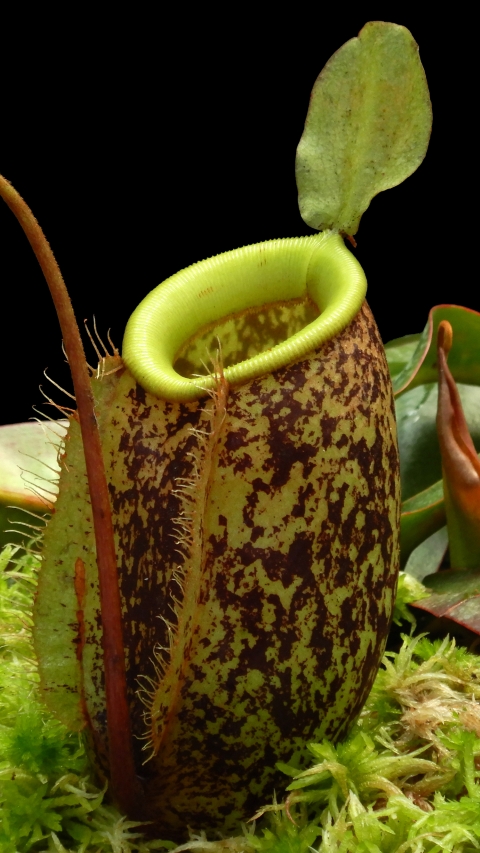
BE-4584
N. sibuyanensis x ampullaria – selected speckled clone
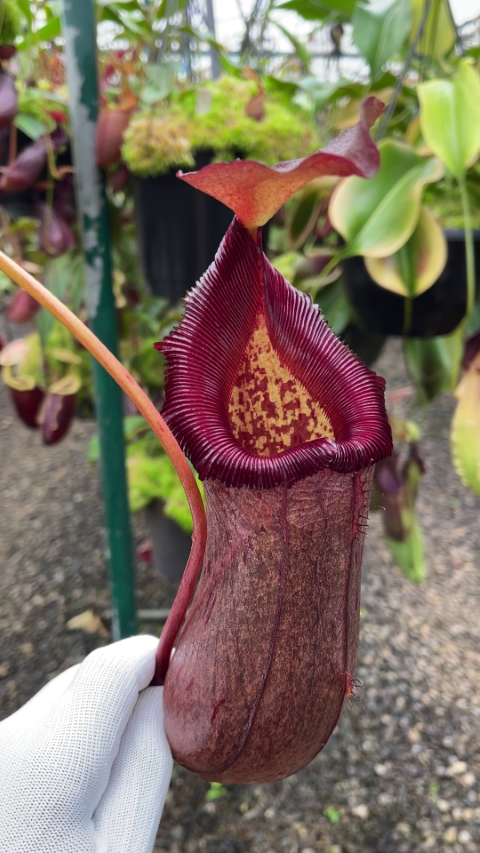
BE-4031
N. (ventricosa x sibuyanensis) x robcantleyi – assorted clones
Crossed N. Sibuyanensis with another species?
Register the cross — if it's not yet documented you'll be the first contributor. If someone already registered it, you'll be redirected to add your photo.