ma_suska · CC BY 2.0
About
Nepenthes sumatrana is a tropical pitcher plant endemic to the Indonesian island of Sumatra. It is characterized by its climbing habit and large, diverse pitchers, making it a significant species within the genus *Nepenthes*.
Field notes
Morphology
The plant produces sub-cylindrical climbing stems that can reach up to 15 meters long. Leaves are coriaceous and petiolate, with laminae growing up to 55 cm in length. Pitchers vary greatly: rosette pitchers are ovoid to cylindrical, while lower pitchers are wholly ovoid, reaching up to 20 cm high. The largest traps are the upper pitchers, which are infundibular (funnel-shaped) and can reach 30 cm in height and 15 cm in width. The peristome is cylindrical, and the lid (operculum) is sub-orbiculate.
Distribution & habitat
This species is endemic to the Indonesian provinces of North Sumatra and West Sumatra, with its best-known habitat being the hills around Sibolga. It has a patchy distribution, and its full range is uncertain. It grows terrestrially in dense, undisturbed lowland forest on sandstone substrates, typically found on very steep slopes. It has been recorded from elevations between 0 and 800 meters above sea level.
Ecology
As a carnivorous plant, *Nepenthes sumatrana* traps prey using its specialized pitchers. The exact mechanism of prey capture is not detailed, but the pitchers are designed to ensnare insects and other small organisms. The plant requires moist, shady conditions and is found in undisturbed forest habitats, suggesting a reliance on the natural forest ecosystem for survival.
Cultivation notes
The species requires moist, shady conditions and thrives in undisturbed forest environments. While specific temperature or humidity ranges are not provided, its dependence on lowland forest suggests high humidity is necessary. It is noted for its ability to grow on sandstone substrates, and its survival is linked to undisturbed habitats.
History & etymology
The species was first collected by Johannes Elias Teijsmann in February 1856 near Sibolga. Initially, it was described as a variety of *N. boschiana* (1858) and later *N. maxima* (1886). *Nepenthes* was formally published under its current name by Günther Beck von Mannagetta und Lerchenau in 1895, though it underwent numerous taxonomic revisions over the following decades.
Conservation
The conservation status of *N. sumatrana* is listed as Critically Endangered on the 2014 IUCN Red List. The species is highly vulnerable to habitat loss and disturbance, particularly due to rapid development in areas like Sibolga. Its survival is threatened by the destruction of its undisturbed lowland forest habitat.
Habitat
- Altitude
- 0–800 m
- Altitude Class
- lowland
- Native To
- Sumatra, Indonesia
- IUCN Status
- Critically Endangered
Taxonomy
- Described
- 1895
- Authority
- (Miq.) Beck
Cultivation
- Difficulty
- intermediate
- Temperature
- Day 28–35°C / Night 20–28°C
- Humidity
- 70–95%
Borneo Exotics 1 listing
View all →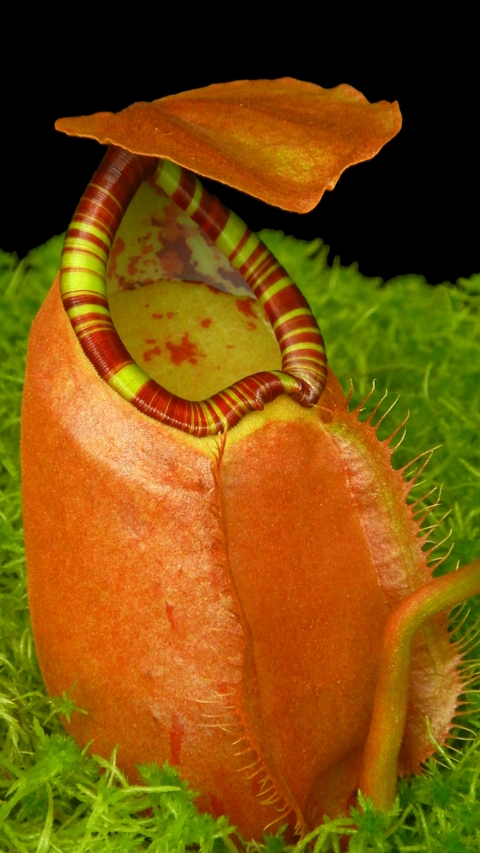
Crossed N. Sumatrana with another species?
Register the cross — if it's not yet documented you'll be the first contributor. If someone already registered it, you'll be redirected to add your photo.