About
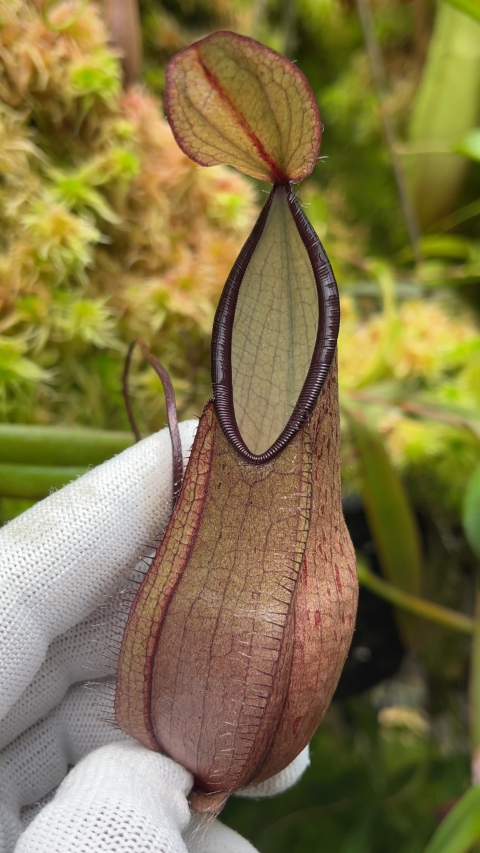
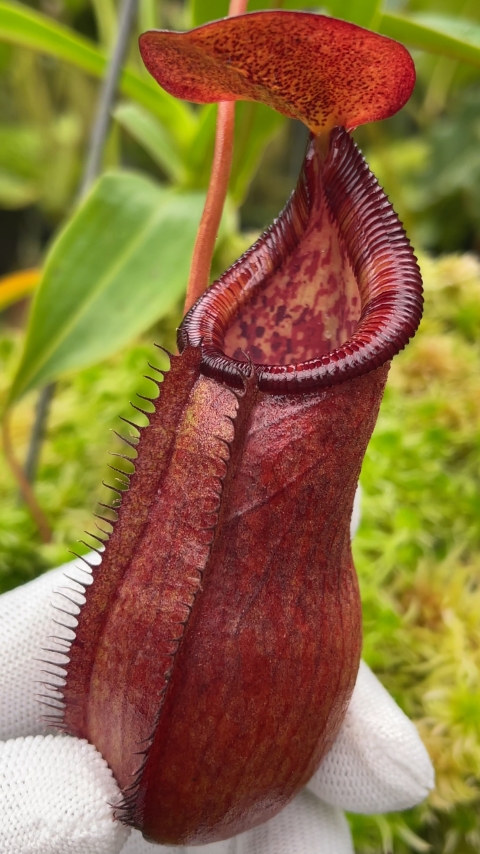
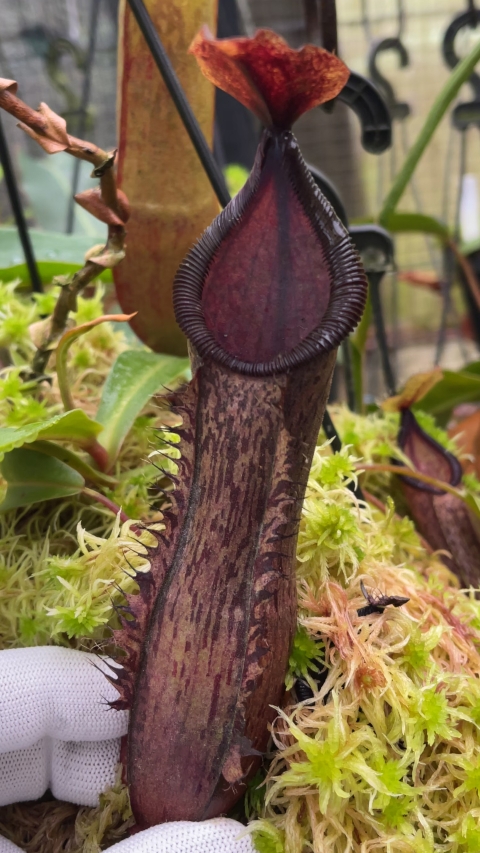
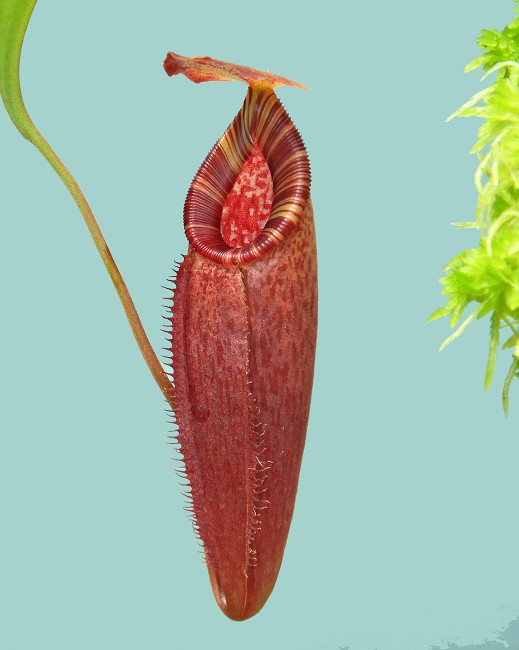
*Nepenthes tentaculata*, or the fringed pitcher-plant, is a climbing tropical species notable for the numerous filiform appendages found on the upper surface of its pitcher lid. It is a widespread plant found across Borneo and Sulawesi, often growing terrestrially in mossy forest environments.
Field notes
Morphology
The plant is a climbing species with stems up to 3 m long and up to 5 mm in diameter. Leaves are sessile, lanceolate to elliptic, up to 15 cm long by 3 cm wide, with a cordate base. Pitchers are generally small, rarely exceeding 15 cm, but can reach 30 cm high. Lower pitchers feature a pair of fringed wings down the front, while upper pitchers are more cylindrical and often have reduced wings. The peristome is roughly cylindrical, up to 5 mm wide, and the operculum is ovate, often bearing numerous filiform appendages.
Distribution & habitat
Widespread across Borneo and Sulawesi, typically found at altitudes between 1,200 and 2,550 m, though it has been recorded as low as 400 m on coastal mountains.
History & etymology
The species was formally described by Joseph Dalton Hooker in his 1873 monograph, based on specimens collected by Thomas Lobb in 1853. The specific epithet tentaculata is derived from the Latin word tentacula, meaning "tentacles," referring to the appendages on the pitcher lid.
Conservation
Least Concern (IUCN Red List, 2018)
Habitat
- Altitude
- 400–2,550 m
- Altitude Class
- intermediate
- Native To
- Borneo, Sulawesi
- IUCN Status
- Least Concern
Taxonomy
- Described
- 1873
- Authority
- Hook.f.
Cultivation
- Difficulty
- intermediate
- Temperature
- Day 22–30°C / Night 15–22°C
- Humidity
- 70–95%
Crossed N. Tentaculata with another species?
Register the cross — if it's not yet documented you'll be the first contributor. If someone already registered it, you'll be redirected to add your photo.